
Food Industry Marking & Coding – Consulting, Solutions and Products
The marking and coding of food products is much more than a regulatory requirement. It forms the foundation for traceability, product safety and efficient production processes.
Traceability, Safety and Efficiency • Modern Marking & Coding Systems
The demands placed on the food industry continue to increase. Consumers expect maximum transparency, regulatory authorities require complete traceability, and manufacturers face constant pressure to improve production efficiency. Against this backdrop, food product marking and coding play a critical role.
Whether it is a best-before date, batch number, production timestamp or traceability code, virtually every food product must be clearly identified. Modern marking and coding systems ensure that this information is applied reliably, legibly and permanently to products and packaging.
In recent years, Thermal Inkjet (TIJ) technology has become a flexible and cost-effective solution for industrial food coding applications. In addition to fixed installation printers, portable handheld inkjet printers are becoming increasingly popular, as they enable fast and convenient product marking and coding directly on-site.
Legal Requirements for Food Labeling
The labeling of food products in Europe is governed by various regulations. Manufacturers are required to provide essential information for consumers and authorities. This includes, among others:
- Best-before date or use-by date
- Batch and lot numbers
- Production dates
- Traceability information
- Manufacturer details
- Barcodes or data matrix codes
Incorrect or incomplete labeling can not only lead to regulatory non-compliance but, in the worst case, also result in costly product recalls.
For this reason, more and more companies are adopting modern coding and marking solutions that can be seamlessly integrated into existing production processes.
Challenges in Food Production
The food industry places special demands on marking systems. Production lines often operate at high speeds, while printed information must remain clearly legible under challenging conditions. In addition, a wide range of packaging materials must be handled, such as:
- Cardboard packaging
- Plastic packaging
- Films
- Paper labels
- Egg cartons
- Corrugated cardboard
- Shipping packaging
A coding system must therefore be flexible enough to deliver precise print results on a wide variety of surfaces.
Especially for seasonal products or frequently changing batches, easy operation is crucial. Long setup times or complex software solutions can significantly disrupt production flow.
Marking Solutions for Direct Marketers, Organic Farms and Small Food Producers
Not only large industrial companies benefit from modern coding systems. Smaller businesses such as organic farms, farm shops, beekeepers, dairies, butcher shops, direct marketers or regional manufacturers also face the challenge of labeling their products in a compliant and professional way.
In smaller production environments, products, batches and packaging often change frequently. Seasonal goods, varying quantities or individual customer orders make rigid labeling solutions impractical. At the same time, consumers expect transparent labeling even for regional products, including information such as origin, production date or best-before date.
This is where mobile TIJ handheld printers show their strengths. They enable fast and flexible marking without complex production systems or expensive labeling equipment. Egg cartons from free-range production, meat packages from local farms, honey boxes, fruit and vegetable crates or shipping cartons can be printed directly on-site with variable data.
Another advantage is that many small producers offer products in different packaging sizes. While industrial systems often require line adjustments for every packaging change, handheld printers can be switched within seconds to new print content or formats. This makes even small batch sizes economically viable to label.
In addition, traceability is becoming increasingly important for regional producers. Batch numbers, production data or QR codes can be easily applied to packaging or shipping cartons, creating additional transparency for customers and business partners.
Thermal Inkjet (TIJ) as a Modern Coding Technology
Thermal inkjet systems are among the most widely used technologies for industrial product marking today. They enable high-resolution print images while requiring minimal maintenance.
The principle is based on microscopic ink droplets that are precisely applied to the surface, resulting in sharp text, barcodes or QR codes.
Compared to many older coding technologies, TIJ systems offer numerous advantages. Print quality remains consistently high, even with small font sizes. Variable data can be adjusted in real time, allowing different batch numbers or production data to be printed automatically. At the same time, many maintenance tasks required by other printing methods are eliminated.
For food manufacturers in particular, this means high process reliability combined with low operating costs.
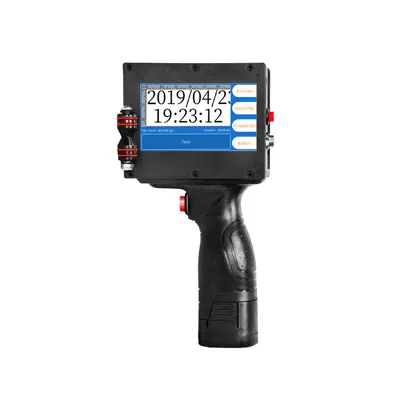
NasaJet® NJ-100
Handheld Printer
The affordable entry into the world of portable TIJ printing. Mark and label quickly and economically anywhere.
www.nasajet.com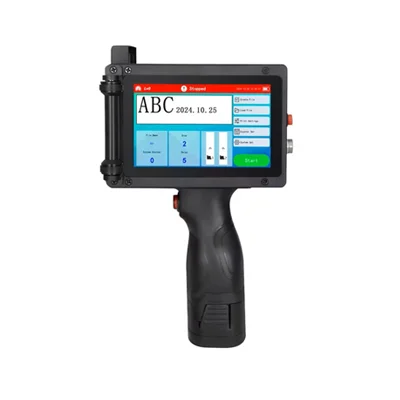
NasaJet® NJ-500
Handheld Printer
With two 1-inch TIJ cartridges, the NasaJet® NJ-500 achieves print heights over 50 mm. Large font printing in a portable format.
www.nasajet.com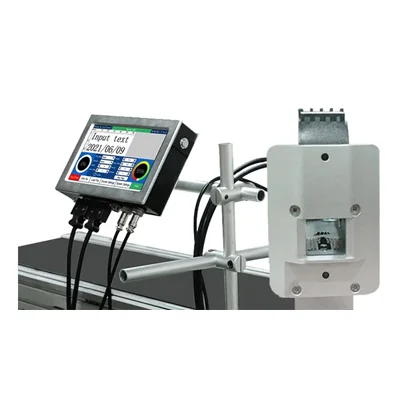
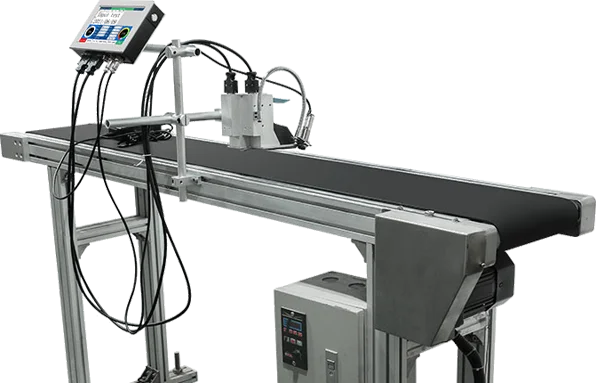
NasaJet® NJ-1000
Marking System
The NJ-1000 marking system is suitable for quickly upgrading existing production lines for simple labeling tasks.
www.nasajet.com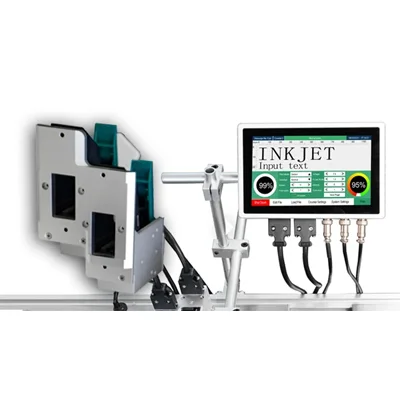
NasaJet® NJ-5000
Large Font Printer
The professional marking system for all requirements. Multiple print heads, parallel printing, and more.
www.nasajet.com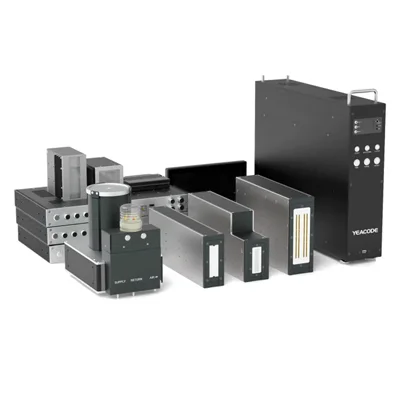
Yeacode Series 7
Marking System
Discover the Yeacode 7 Series, the marking system for the highest demands.
www.yeacode.de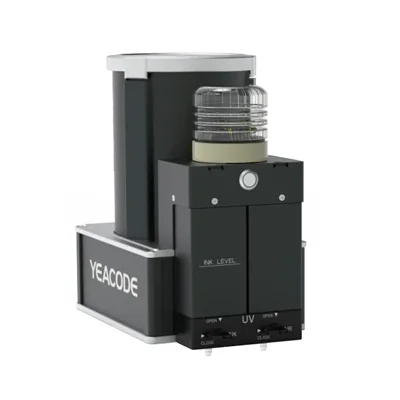
Yeacode CISS
Continuous Ink Supply System
Ensures consistent and uninterrupted ink supply for high-volume printing.
www.yeacode.de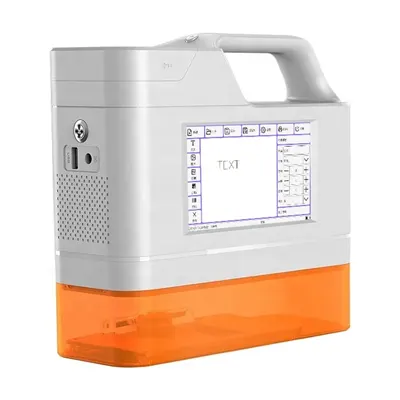
Laser Marking TL3pro
Laser Marking
Compact and portable laser marking device
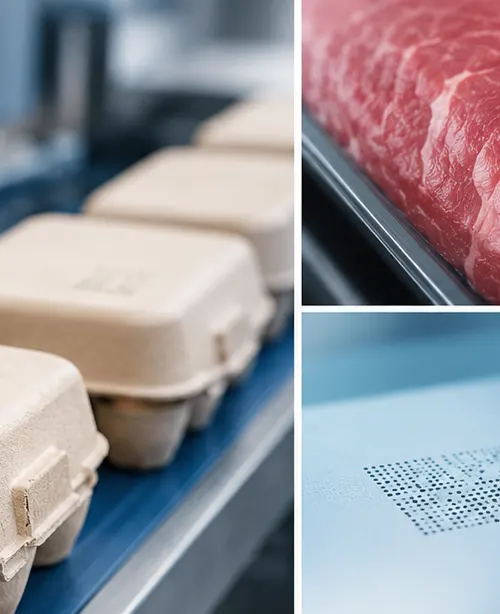
Example: Marking of Egg Cartons
A typical application for TIJ marking systems is the marking of egg cartons.
Eggs are among the most sensitive food products when it comes to traceability and origin documentation. Packaging must often be labeled with batch codes, production dates or internal identification numbers.
Thermal inkjet systems enable clean and precise marking directly on cardboard surfaces. Even on rough or slightly structured materials, highly legible print results are achieved.
Thanks to high print resolution, even complex codes can be applied without wasting valuable space on the packaging.
Example: Marking of Meat Packaging
In the meat industry as well, coding and marking play a crucial role.
Fresh meat products are often packaged in plastic trays with sealed films. Best-before dates, batch numbers and traceability codes must be applied reliably.
Modern TIJ printing systems can print directly onto packaging films or labels and deliver sharp results even at high production speeds.
Since meat products are often stored chilled or frozen, durable and legible marking is essential. Specially developed inks ensure that the marking remains intact even under demanding storage conditions.
Consulting as a Success Factor: Food Industry Marking
The food industry is currently undergoing a digital transformation. Modern coding systems are increasingly integrated into ERP, warehouse management and production systems. This allows print data to be automatically transferred from existing databases. Manual input errors are reduced and production processes become more efficient. This creates the foundation for a fully digital and traceable food production system.
Sustainability is also becoming increasingly important in product marking. Precise printing reduces waste and avoids misprints. At the same time, manufacturers can eliminate additional labels by applying information directly onto packaging.
At Geotechtronics, we combine many years of experience with a broad product portfolio to deliver tailored and cost-efficient solutions for your individual marking challenges.
- Selection of suitable control electronics and printheads
- Recommendation of appropriate inks
- Integration into conveyor and control systems
- Employee training
- Service and support concepts
- ...
Custom Solutions – Integration into Existing Systems
Modern TIJ marking systems provide food manufacturers with a powerful solution for the marking of egg cartons, meat packaging, cartons, films and many other packaging types. With high print quality, low maintenance costs and flexible application options, they are suitable both for automated production lines and mobile handheld applications.
The future of food marking will be strongly shaped by digitalization and automation. Modern systems must do far more than simply apply a date.
TIJ marking systems and handheld printers offer the flexibility required to respond quickly to changing demands.
TIJ marking systems can be integrated flexibly:
- Standalone or line-integrated
- PLC integration
- Automatic data input
- Sensor and encoder integration
- ...