

Consulting, Solutions, Products
PLC integration of marking systems is an important step toward the automation of modern production lines.
Efficient Integration of Marking Systems into Production
In modern production environments, seamless communication between machines plays a crucial role. Especially in automated manufacturing lines, marking systems must operate precisely, quickly, and reliably. PLC integration of marking systems makes it possible to control marking processes directly via the machine control system and fully integrate them into the production logic.
In the context of TIJ marking systems (Thermal Inkjet), PLC integration offers significant advantages: production data can be automatically transmitted to the printer, marking jobs are triggered in synchronization with product movement, and errors can be detected in real time.
How PLC integration works, what advantages it offers, and how companies can optimally integrate TIJ marking systems into their production environment is explained here.
What Does PLC Integration Mean for Marking Systems?
A Programmable Logic Controller (PLC) is a robust industrial computer used for the automation of machines and processes (for example production lines). It processes signals from sensors (inputs) through a program and controls actuators (outputs). PLCs are flexibly programmable and have largely replaced older hard-wired relay control systems.
The PLC integration of a marking system describes the direct connection of an industrial printer to a Programmable Logic Controller (PLC). The PLC acts as the central control unit of a production line. Through this connection the PLC can:
- start or stop marking jobs
- transfer print data
- control printing parameters
- retrieve status information
- report error conditions
- notify required maintenance
This turns the marking system into a fully integrated component of production automation.
Why Is PLC Integration Important for Marking Systems?
In many industries – such as food, pharmaceuticals, electronics, or the automotive sector – products must be marked during production. Typical content includes batch numbers, expiration dates, serial numbers, barcodes, QR codes, or production data.
Without PLC integration, this data often has to be entered manually or controlled via separate systems. This increases the risk of errors and reduces production efficiency.
An automated PLC connection enables:
- dynamic print data
- synchronized print triggering
- complete traceability
- reduced operator errors
Digital Inputs and Outputs
A simple method of integration is implemented via digital signals. This method is particularly robust and well suited for basic marking requirements. Typical signals include:
Inputs of the Marking System
- Print start
- Print stop
- Product detection
- Trigger signal
Printer Outputs
- Print ready
- Error status
- Cartridge status
- Warning messages
For more complex production lines, fieldbus communication is often used. In this case, data exchange takes place via industrial communication protocols such as Profinet, EtherNet/IP, Modbus TCP, or EtherCAT.
TIJ Marking Systems in Automated Production Lines
Thermal Inkjet (TIJ) is a widely used technology for industrial marking systems. TIJ printers use replaceable cartridges and produce high-resolution print images.
Typical advantages of TIJ marking systems:
- high print resolution
- low-maintenance technology
- compact design
- easy integration
- fast start-up time
Thanks to their compact architecture, TIJ marking systems can be easily integrated into automated production lines and manufacturing systems.
Network-Based Control
Many modern TIJ marking systems can also be connected to production systems via Ethernet or TCP/IP. Through this connection it is possible to:
- load print layouts
- generate serial numbers
- create batch numbers
- transfer production data
- read diagnostic information
This method is particularly suitable for Industry 4.0 environments. A major advantage of PLC integration is that print data can be generated directly from the production process.
- sequential serial numbers
- variable batch numbers
- time-based data
- production codes
The PLC transfers this information to the marking system, which automatically integrates it into the print layout. This enables fully automated product marking.
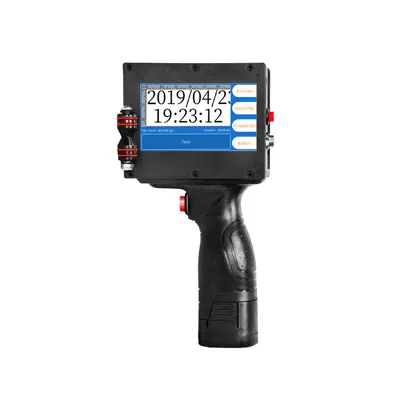
NasaJet® NJ-100
Handheld Printer
The affordable entry into the world of portable TIJ printing. Mark and label quickly and economically anywhere.
www.nasajet.com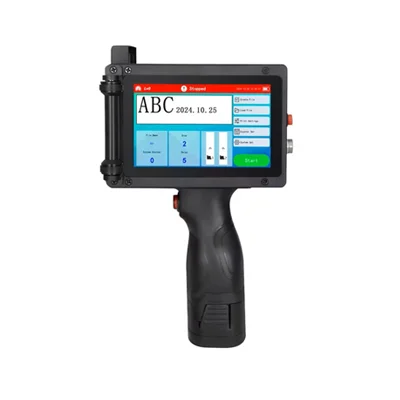
NasaJet® NJ-500
Handheld Printer
With two 1-inch TIJ cartridges, the NasaJet® NJ-500 achieves print heights over 50 mm. Large font printing in a portable format.
www.nasajet.com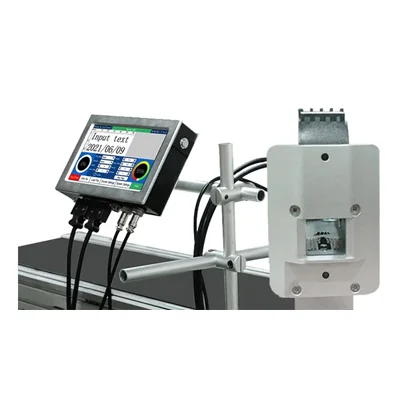
NasaJet® NJ-1000
Marking System
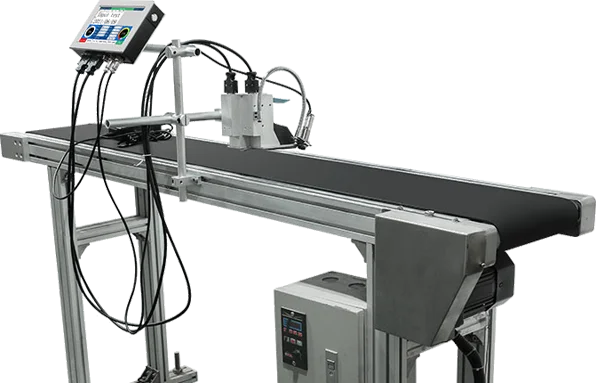
The NJ-1000 marking system is suitable for quickly upgrading existing production lines for simple labeling tasks.
www.nasajet.com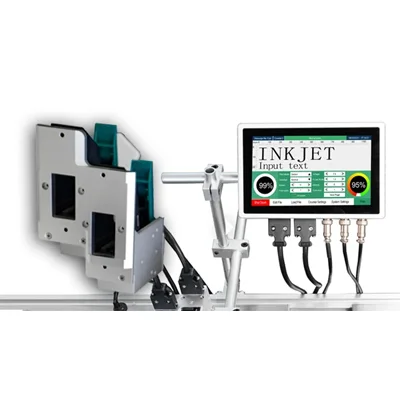
NasaJet® NJ-5000
Large Font Printer
The professional marking system for all requirements. Multiple print heads, parallel printing, and more.
www.nasajet.com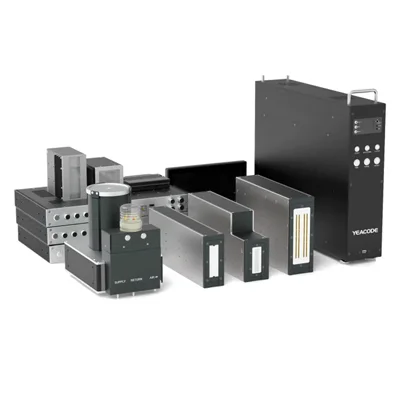
Yeacode Series 7
Marking System
Discover the Yeacode 7 Series, the marking system for the highest demands.
www.yeacode.de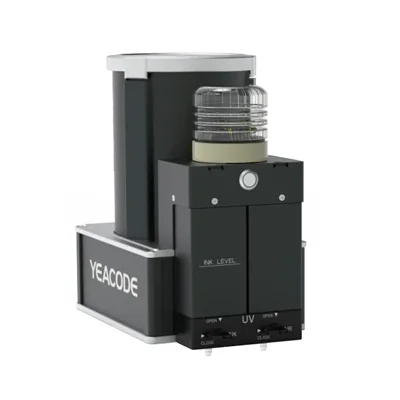
Yeacode CISS
Continuous Ink Supply System
Ensures consistent and uninterrupted ink supply for high-volume printing.
www.yeacode.de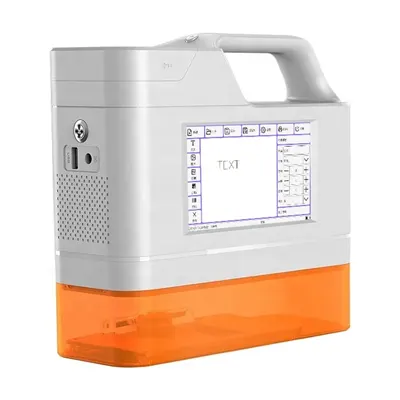
Laser Marking TL3pro
Laser Marking
Compact and portable laser marking device
Advantages of PLC Integration for TIJ Marking Systems
The integration of TIJ printers into a PLC environment offers numerous advantages.
Higher Automation
Marking processes run automatically and do not need to be started manually.
Error Reduction
Since marking data is generated directly from production data, the risk of incorrect codes is reduced.
Flexibility
New products or print layouts can be quickly adapted via the control system.
Real-Time Production Data
All marking information is available within the production system.
Scalability
Additional marking systems can easily be integrated into existing production lines.
Practical Example: PLC-Controlled TIJ Marking
A packaging machine manufacturer integrates a TIJ marking system directly into its machine.
The process:
- A sensor detects a product on the conveyor belt
- The PLC calculates the print position
- Production data is generated
- The PLC sends a trigger signal to the printer
- The TIJ printhead marks the product
The entire marking process is fully automated – without manual intervention.
Consulting as a Success Factor: PLC Integration
With increasing digitalization and automation, PLC integration will continue to gain importance. Smart factory concepts, IoT integration, and automated quality control processes make high-resolution and flexible marking systems indispensable.
At Geotechtronics, we combine many years of experience with a broad product portfolio to provide efficient and customized solutions for your individual marking requirements.
- Selection of suitable control electronics and printheads
- Recommendation of appropriate inks
- Integration into conveyor systems and PLC control
- Training of operating personnel
- Service and support concepts
- and more
Future of PLC-Integrated Marking Systems
As industrial digitalization continues to evolve, the importance of networked marking systems will continue to grow. Future developments in PLC integration may include:
- integration into MES systems
- cloud-based print data management
- automatic layout generation
- intelligent maintenance diagnostics
- complete production traceability
TIJ marking systems will play an important role in this development, as they can be integrated flexibly into modern digital production environments.