
Consulting, Solutions, Products
Meet legal labeling requirements reliably while maintaining efficient production processes.
Reliable Identification of Medical Devices with UDI Codes
The requirements for medical device labeling have increased significantly in recent years. In addition to product safety and quality, complete traceability is now a key focus. UDI codes (Unique Device Identification) were introduced for precisely this purpose. They enable the unique identification of medical devices worldwide and help to better protect patients, carry out product recalls more efficiently, and make counterfeiting more difficult.
For medical device manufacturers, UDI labeling is now an integral part of regulatory requirements. At the same time, it places high demands on marking technology, as codes must be applied permanently, with high contrast and in a machine-readable format to a wide variety of materials.
What Is a UDI Code?
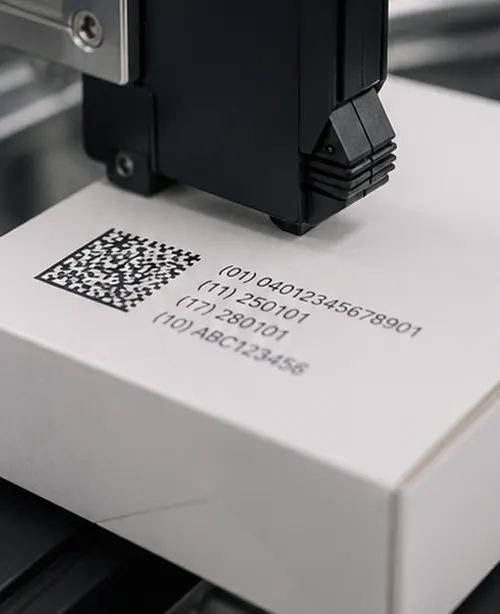
The term UDI (Unique Device Identification) refers to a globally standardized system for the unique identification of medical devices. Each applicable product receives an individual identification that is applied both in human-readable form and in machine-readable form, for example as a DataMatrix code.
The aim of the system is to uniquely identify and trace every medical device throughout its entire lifecycle. This makes it possible to:
- Carry out targeted product recalls
- Prevent mix-ups
- Make counterfeiting more difficult
- Optimize inventory management
- Improve patient safety
- Meet regulatory requirements
Why Were UDI Codes Introduced?
Before the introduction of the UDI system, different identification systems existed around the world. This made international supply chains and product recalls particularly challenging.
The European Medical Device Regulation (MDR) and In Vitro Diagnostic Regulation (IVDR) established standardized requirements. Manufacturers must uniquely identify their products and store the corresponding master data in the designated databases.
This benefits not only regulatory authorities, but also hospitals, distributors, logistics companies and, ultimately, patients.
In practice, identification is generally implemented using GS1 DataMatrix, GS1-128, HIBC or ICCBBA codes, with the first two being among the most widely used.
Which Products Require a UDI Code?
In principle, almost all medical devices are subject to the UDI requirement.
Examples include:
- Implants
- Surgical instruments
- Catheters
- Syringes
- Infusion systems
- Dressings and bandages
- Blood pressure monitors
- Diagnostic systems
- Medical consumables
- Laboratory equipment
- In vitro diagnostics
Depending on the product class, different implementation deadlines and detailed requirements apply.
Exemptions include, among others:
- Custom-made devices
- Devices intended for clinical investigations
- Certain performance study devices
Structure of a UDI Code
A complete UDI generally consists of two components.
UDI-DI (Device Identifier)
The UDI-DI uniquely identifies the product type. It generally remains unchanged for a specific model and serves as the primary identifier. It can contain information such as:
- Manufacturer
- Product family
- Model
- Article number
UDI-PI (Production Identifier)
Depending on the product class, different implementation deadlines and detailed requirements apply.
The Production Identifier contains variable production data. Depending on the product, this may include:
- Batch number
- Serial number
- Manufacturing date
- Expiry date
- Software version
These details enable the unique identification of each individual production unit.
Challenges of UDI Labeling
Manufacturers often face a range of technical challenges. Typical examples include:
- Small packaging sizes
- High production speeds
- Changing batch data
- Different packaging materials
- Integration into existing production lines
- Validation of print quality
Especially in automated production processes, every individual code must be generated reliably.
Benefits of Automated UDI Labeling
Automated labeling reduces errors while increasing efficiency. Key benefits include:
- Less manual effort
- Greater process reliability
- Fewer production errors
- Complete traceability
- Fast product changeovers
- Easy ERP and MES integration
- High production speeds
UDI Marking on Stainless Steel, Copper and Other Materials
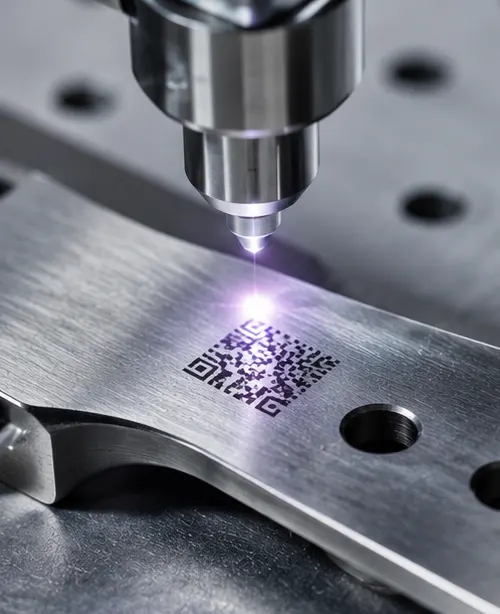
UDI labeling places high demands on the durability and readability of markings. Depending on the material, surface and application, different marking methods can be used. Stainless steel, copper, aluminum and other metals, for example, can be permanently and precisely marked using modern laser marking systems.
For UDI marking on metal, annealing marking, laser engraving and high-contrast laser marking are particularly suitable. With annealing marking, the surface of the material is selectively modified to create a clearly visible contrast without significantly removing material. Laser engraving, on the other hand, creates a tactile recess and is particularly suitable for applications requiring high mechanical durability.
UDI DataMatrix codes, barcodes, serial numbers, batch numbers and other product information can also be applied directly to components and medical devices, such as medical instruments and implants. The appropriate marking method depends on factors including the material, surface properties, desired contrast and requirements for permanent traceability. This results in precise and permanently readable UDI markings that meet the demanding requirements of industrial and medical applications.
Reliably Print UDI Codes with TIJ Marking Systems
The high requirements for UDI labeling can only be met reliably and permanently with precise, dependable marking technology. Thermal Inkjet (TIJ) marking systems in particular have become established for marking medical devices, packaging and labels.
With print resolutions of up to 600 dpi, TIJ systems produce exceptionally sharp DataMatrix codes, barcodes, GS1 codes, serial numbers, batch numbers and expiry dates, even on small printing areas. Variable data can also be transferred in real time directly from production, ERP or MES systems and applied automatically.
Further advantages of modern TIJ printing systems include:
- High-resolution printing for optimum scanner readability
- Precise printing of GS1 DataMatrix and UDI codes
- Contactless printing for sensitive packaging
- Clean, low-maintenance technology
- Easy integration into existing production lines
- Printing on cardboard, labels, films, plastics, Tyvek®, paper and many other materials
- Ideal for serial numbers, batch identification, expiry dates, QR codes and variable production data
- High printing speeds even on automated production lines
Especially in regulated industries such as medical technology, TIJ marking systems help manufacturers reliably meet legal labeling requirements while maintaining efficient production processes. The combination of high print quality, flexible data integration and minimal maintenance makes them a future-proof solution for reliable UDI labeling.
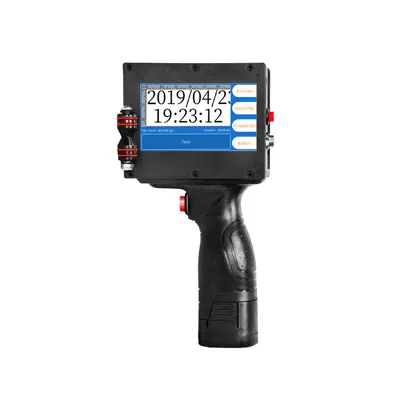
NasaJet® NJ-100
Handheld Printer
The affordable entry into the world of portable TIJ printing. Mark and label quickly and economically anywhere.
www.nasajet.com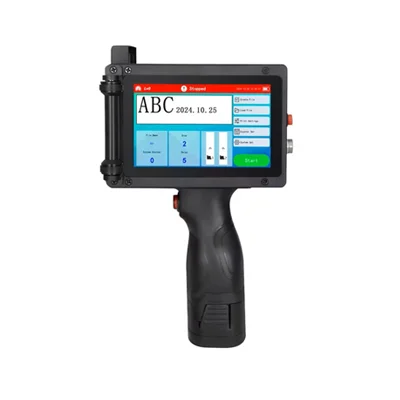
NasaJet® NJ-500
Handheld Printer
With two 1-inch TIJ cartridges, the NasaJet® NJ-500 achieves print heights over 50 mm. Large font printing in a portable format.
www.nasajet.com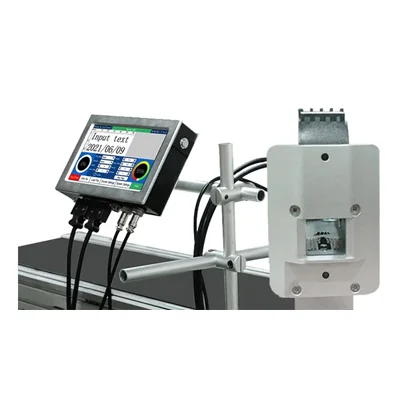
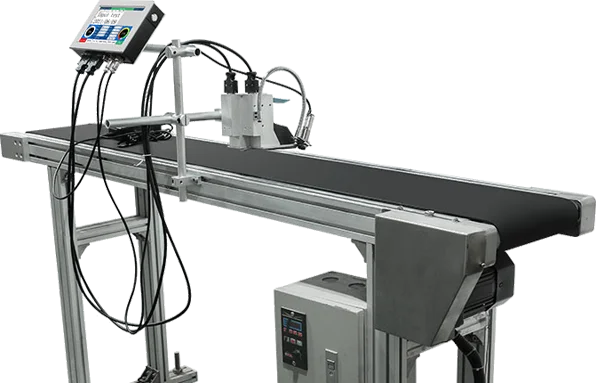
NasaJet® NJ-1000
Marking System
The NJ-1000 marking system is suitable for quickly upgrading existing production lines for simple labeling tasks.
www.nasajet.com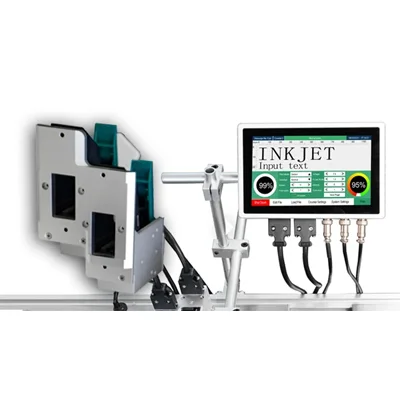
NasaJet® NJ-5000
Large Font Printer
The professional marking system for all requirements. Multiple print heads, parallel printing, and more.
www.nasajet.com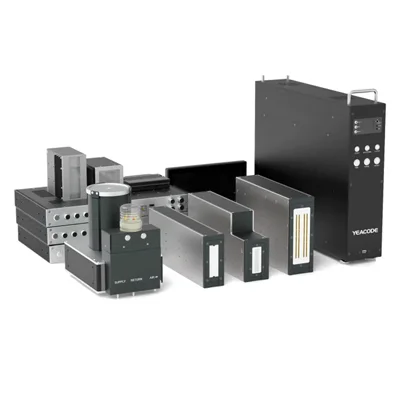
Yeacode Series 7
Marking System
Discover the Yeacode 7 Series, the marking system for the highest demands.
www.yeacode.de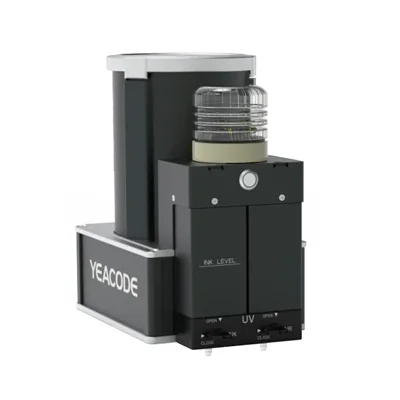
Yeacode CISS
Continuous Ink Supply System
Ensures consistent and uninterrupted ink supply for high-volume printing.
www.yeacode.de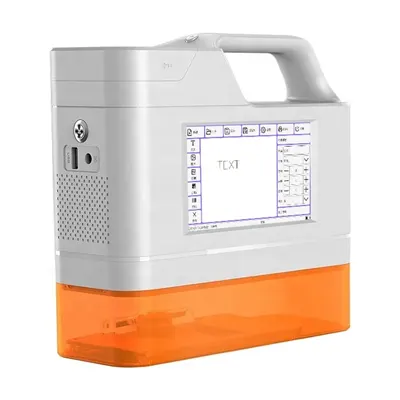
Laser Marking TL3pro
Laser Marking
Compact and portable laser marking device