
Consulting, Solutions, Products
Companies looking to optimize production processes while reliably complying with legal identification requirements today rely on intelligent solutions for mobile bottle marking.
Modern Identification Solutions for Bottles/Glass Bottles in Industry and Production
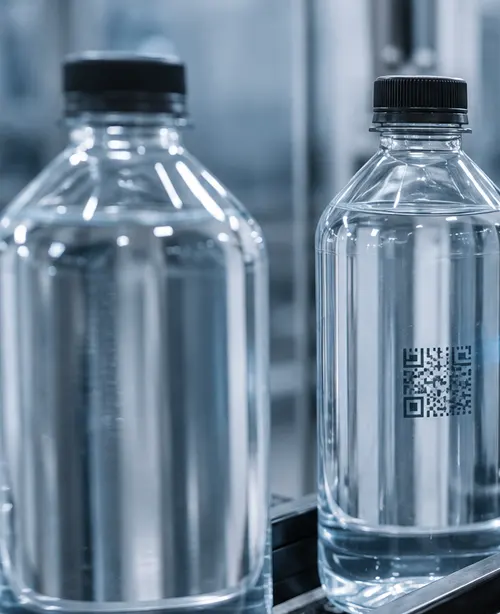
The professional bottle labeling process has become one of the central requirements in modern production and packaging operations. Whether in the food industry, beverage production, cosmetics sector, chemical industry, or pharmaceutical manufacturing – bottles must be marked reliably, permanently, and in compliance with regulations. Batch numbers, best-before dates, barcodes, QR codes, and production data have become essential.
With modern handheld printers and mobile marking systems from TIJ Marking Systems, bottles can be marked flexibly, quickly, and precisely – directly in production, warehousing, or logistics processes. In particular, so-called TIJ technology (Thermal Inkjet) has established itself in recent years as an efficient and cost-effective solution.
Why Professional Bottle Marking Has Become Essential Today
Strict requirements regarding traceability, product safety, and labeling obligations apply in almost every industry today. Consumers expect transparent information, while legal regulations require products to be clearly identifiable.
Professional bottle marking fulfills several functions at the same time. It not only ensures compliance with legal labeling requirements, but also supports internal production workflows, quality control processes, and the automation of logistics operations.
Bottles made from glass, plastic, PET, or metal present specific challenges. Different surfaces, condensation, uneven shapes, or high production speeds require flexible yet highly precise printing systems.
This is where modern handheld printers and mobile inkjet systems come into play.
TIJ Handheld Printers as a Flexible Solution for Bottle Labeling
Thermal inkjet handheld printers provide companies with a highly versatile solution for direct marking of bottles and packaging. Unlike large stationary printing systems, mobile devices can be used flexibly and adapted quickly to changing production conditions. With a modern handheld printer, the following information can be applied directly onto bottles:
- Best-before dates
- Batch numbers
- Production data
- Time stamps
- QR codes
- Barcodes
- Logos
- Serial numbers
- Variable data
The devices operate contact-free and therefore allow clean and material-friendly marking on a wide variety of bottle types.
Especially for small and medium-sized businesses, mobile bottle marking offers major advantages. Production lines do not need extensive modifications, and changing products can be labeled quickly and efficiently.
Bottle Labeling on Glass, PET, and Plastic
The requirements for marking vary significantly depending on the material. Glass bottles, for example, have very smooth surfaces, while PET bottles are often flexible and slightly deformable. Plastic containers may also require different inks depending on the material composition.
Modern TIJ systems support the use of specialized inks that can be precisely matched to the respective material. This enables high-resolution print results with excellent adhesion and fast drying times.
This is particularly important in the beverage industry. Production lines often operate at high speeds, meaning prints must be immediately smudge-proof. At the same time, markings must neither smear nor fade.
Even in humid production environments or on cooled bottles, labels must remain clearly legible and durable.
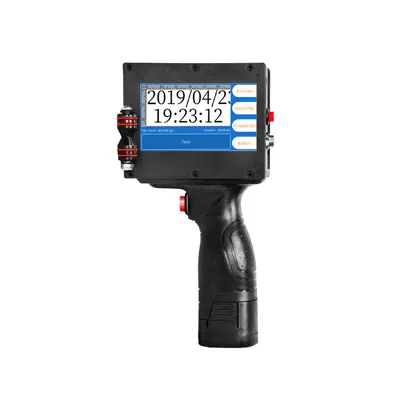
NasaJet® NJ-100
Handheld Printer
The affordable entry into the world of portable TIJ printing. Mark and label quickly and economically anywhere.
www.nasajet.com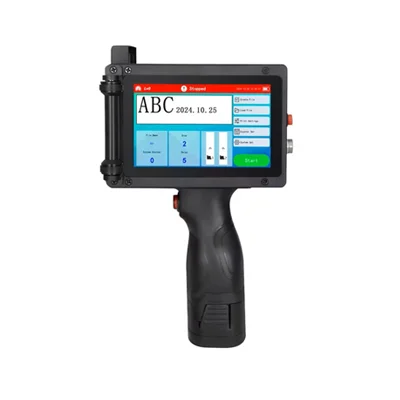
NasaJet® NJ-500
Handheld Printer
With two 1-inch TIJ cartridges, the NasaJet® NJ-500 achieves print heights over 50 mm. Large font printing in a portable format.
www.nasajet.com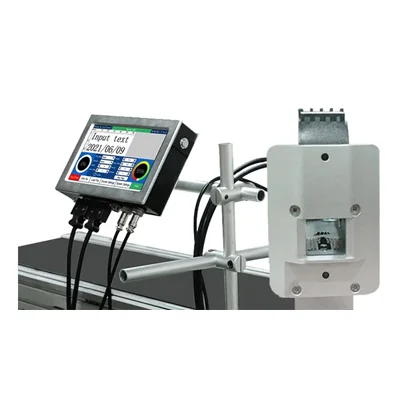
NasaJet® NJ-1000
Marking System
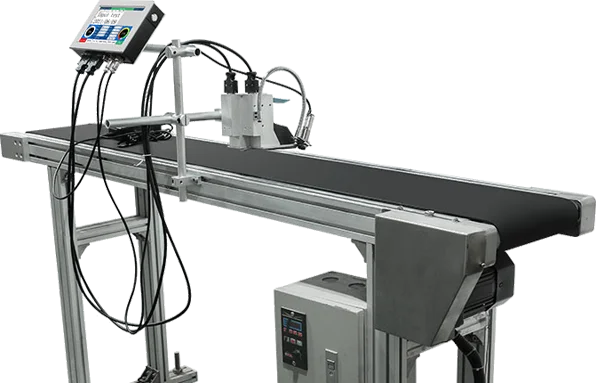
The NJ-1000 marking system is suitable for quickly upgrading existing production lines for simple labeling tasks.
www.nasajet.com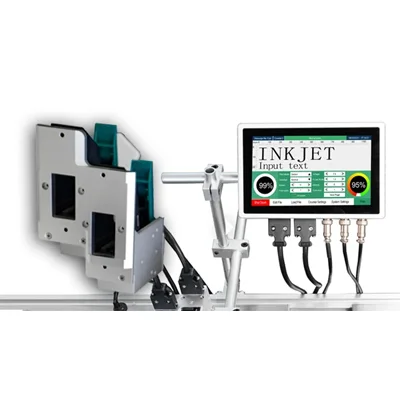
NasaJet® NJ-5000
Large Font Printer
The professional marking system for all requirements. Multiple print heads, parallel printing, and more.
www.nasajet.com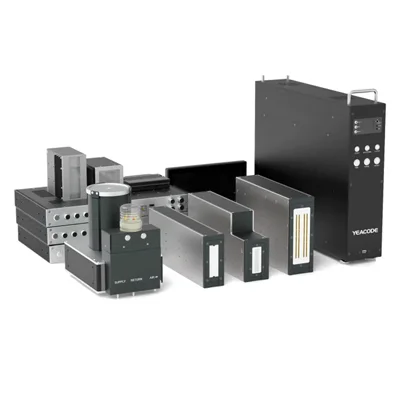
Yeacode Series 7
Marking System
Discover the Yeacode 7 Series, the marking system for the highest demands.
www.yeacode.de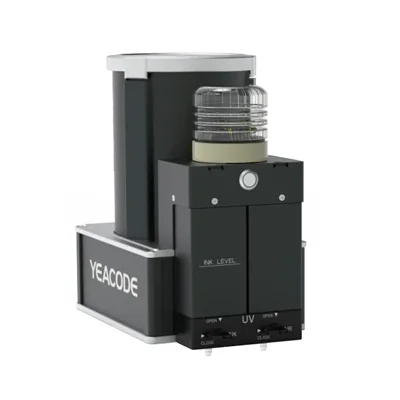
Yeacode CISS
Continuous Ink Supply System
Ensures consistent and uninterrupted ink supply for high-volume printing.
www.yeacode.de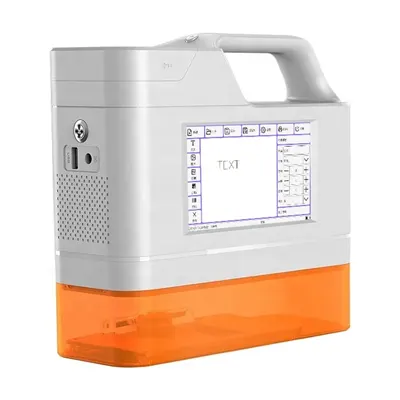
Laser Marking TL3pro
Laser Marking
Compact and portable laser marking device
Sustainability and Efficiency in Bottle Marking
More and more companies are focusing on sustainable production processes. Resource-saving technologies are also becoming increasingly important in the field of bottle labeling.
TIJ marking systems operate particularly efficiently because only small amounts of ink are required. At the same time, additional labels can often be eliminated entirely. This reduces material consumption, storage costs, and waste volumes.
In addition, mobile marking systems enable demand-oriented labeling directly within the production process. Misprints and production waste can therefore be significantly reduced.
Companies benefit not only from lower operating costs, but also from optimized production workflows.
Bottle Identification Across Different Industries
The requirements for bottle marking vary considerably between industries. Modern identification systems therefore need to be highly versatile.
In the food and beverage industry, the focus is primarily on best-before dates, batch numbers, and traceability. In the cosmetics industry, premium print quality also plays an important role.
The chemical industry, on the other hand, requires especially durable markings capable of withstanding aggressive environmental conditions. In the pharmaceutical industry, strict regulatory requirements regarding readability and documentation apply.
Flexible TIJ handheld printers allow adaptation to all of these requirements and provide companies with a future-proof solution for a wide range of applications.
Future of Bottle Labeling
The requirements for industrial identification systems will continue to increase in the coming years. Digitalization, automation, and regulatory requirements are continuously driving the development of modern marking technologies.
In particular, QR codes and digital traceability are becoming increasingly important. Consumers want to access detailed information about origin, ingredients, or production conditions directly via smartphone.
Modern TIJ handheld printers provide the technical foundation for this. They enable high-resolution codes, variable data, and flexible printing processes in almost every production environment.
Companies that invest early in innovative bottle marking solutions benefit long-term from more efficient workflows, greater product safety, and improved competitiveness.
Direct Marking vs. Labeling
| Direct Marking | Labeling |
|---|---|
| Permanent | Removable |
| No additional materials required | Label material required |
| Tamper-resistant | Can be manipulated |
| Cost-efficient for high production volumes | Flexible for design changes |
Consulting as a Success Factor in Bottle Labeling
As digitalization and automation continue to advance, direct marking technologies will become even more important. Smart factory concepts, IoT integration, and automated quality control processes make high-resolution and flexible marking systems indispensable. At Geotechtronics, we combine many years of experience with a broad product portfolio to provide customized and cost-effective solutions for individual marking and identification challenges.
- Selection of suitable control electronics and printheads
- Recommendation of appropriate inks
- Integration into conveyor systems and machine controls
- Employee training
- Service and support concepts
- ...
Integration into Existing Systems
TIJ marking systems and handheld printers in particular provide companies with the flexibility required to react quickly to changing production requirements.
TIJ marking systems can be integrated flexibly:
- Stand-alone or integrated into production lines
- Control via PLC systems
- Automatic data input
- Sensor and encoder integration
- ...