
Plant labeling / plant passport – consulting, solutions, products
Plant labeling is strictly regulated within the EU. Producers and retailers are required to comply with these regulations.
Importance and fundamentals of plant labeling
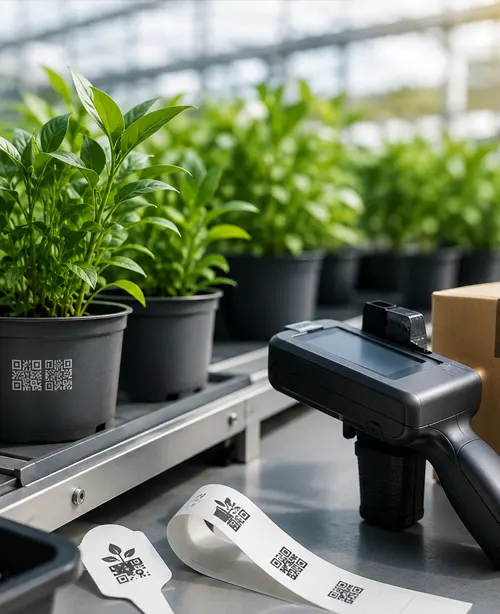
In modern nurseries, reliable, fast and precise marking is no longer a secondary issue – it is a central component of efficient production and distribution processes. Whether in young plant cultivation, potted plant production, greenhouses or shipping: professional horticulture labeling ensures traceability, process reliability and clear communication along the entire value chain.
Especially in times of increasing regulatory requirements – above all the plant passport – flexible marking solutions are becoming significantly more important. Modern TIJ marking systems (thermal inkjet) and mobile handheld printers provide nurseries with a cost-efficient, clean and highly flexible way to label plants, pots, trays, packaging and shipping cartons.
At Geotechtronics, we do not just offer products for industrial marking – we provide customized and future-proof solutions.
Why is plant labeling so important in horticulture?
Requirements for nurseries and plant producers have increased significantly in recent years. In addition to quality, speed and cost efficiency, documentation, traceability and legally compliant labeling are becoming increasingly important.
Professional plant labeling in horticulture fulfills several key functions:
- Identification of plant species and varieties
- Labeling of batches and production lots
- Traceability in plant cultivation
- Marking of pots, trays and cultivation containers
- Labeling of packaging and shipping cartons
- Compliance with legal labeling requirements
- Application of barcodes, QR codes and date information
- Reliable representation of the plant passport
Especially in plant cultivation, horticulture and plant trade, clean labeling determines process quality, traceability and efficiency.
Challenges in labeling
Plant marking in horticulture comes with specific requirements. Unlike in many other industries, marking systems must operate reliably under sometimes demanding conditions.
Typical challenges include:
- Humidity and changing temperatures in greenhouses
- Sensitive surfaces such as plastic pots or plant trays
- Different materials in day-to-day production
- Frequently changing print content
- Small batch sizes and frequent variety changes
- Mobile marking directly at the production site
- High requirements for readability and durability
Traditional labeling systems often reach their limits here – especially when flexibility, speed and low setup effort are required.
This is exactly where modern TIJ marking systems and handheld printers show their strengths.
TIJ marking systems in horticulture: precise, flexible and low-maintenance
TIJ stands for thermal inkjet – a modern printing technology that is ideally suited for industrial labeling in nurseries.
TIJ marking systems use high-resolution inkjet technology and enable direct printing on a wide range of surfaces. These include plastic pots, clay pots, plant trays, cultivation containers, labels, cardboard packaging, paper packaging, films and shipping boxes. In horticulture, TIJ technology stands out due to its high flexibility and ease of use.
Advantages of TIJ marking systems in nurseries
1. High print quality
TIJ systems deliver sharp print images with high resolution. This is especially important for:
- Barcodes
- QR codes
- Batch numbers
- Date information
- Variety labeling
- Plant passport information
Even small font sizes remain clearly readable.
2. Ideal for sensitive production environments
TIJ printers are compact, robust and can be easily integrated into existing production lines – from conveyor belts to shipping stations.
3. Flexible print content
In nurseries, varieties, batches and production data change frequently. TIJ marking systems allow quick adjustments without complex retooling.
Printable content includes:
- Variety names (text/free text)
- Article numbers
- Production dates
- Lot numbers
- Shelf life information for seeds
- QR codes
- Barcodes
- Logos
- Plant passport data
4. Low maintenance and clean
TIJ systems use cartridge technology. This reduces maintenance effort and minimizes downtime – a clear advantage in seasonal horticulture.
Handheld printers for horticulture: mobile marking on site
In addition to stationary TIJ systems, mobile handheld printers are becoming increasingly important in horticulture.
They are ideal for flexible labeling tasks directly at the workplace – without fixed installation and without complex technology.
Application areas of handheld printers in horticulture
Handheld printers are particularly suitable for:
- mobile marking in greenhouses
- labeling directly at planting tables
- printing on pots and trays
- re-labeling in dispatch areas
- labeling of cartons and shipping packaging
- batch marking for small lot sizes
- flexible variety labeling
Especially in changing production areas or seasonal peaks, handheld printers offer maximum flexibility.
Advantages of mobile handheld printers
- wireless and mobile use
- direct printing on the product
- quick adjustment of print content
- ideal for small and medium batch sizes
- easy operation
- low investment costs
- immediately ready for use
For many nurseries, handheld printers are the ideal solution to make labeling processes flexible and cost-efficient.
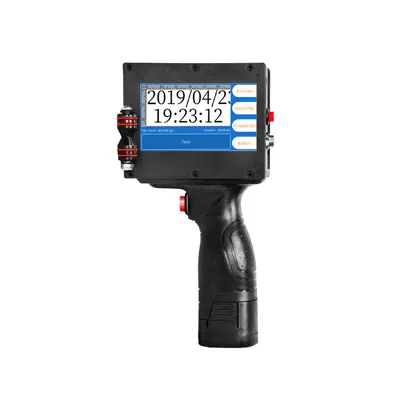
NasaJet® NJ-100
Handheld Printer
The affordable entry into the world of portable TIJ printing. Mark and label quickly and economically anywhere.
www.nasajet.com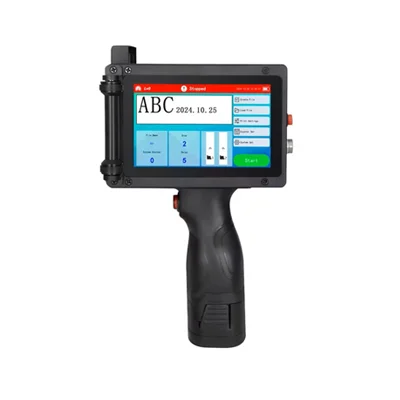
NasaJet® NJ-500
Handheld Printer
With two 1-inch TIJ cartridges, the NasaJet® NJ-500 achieves print heights over 50 mm. Large font printing in a portable format.
www.nasajet.com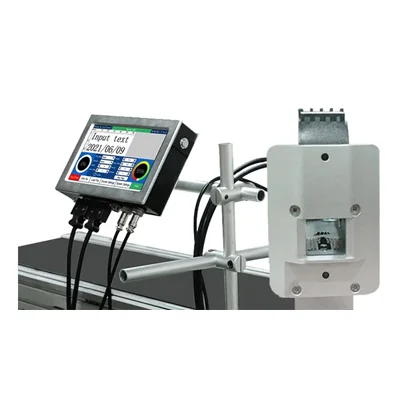
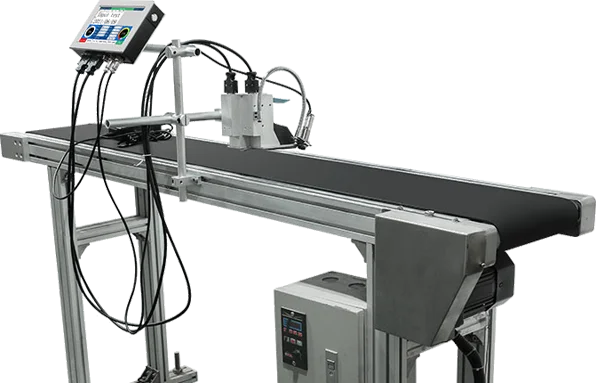
NasaJet® NJ-1000
Marking System
The NJ-1000 marking system is suitable for quickly upgrading existing production lines for simple labeling tasks.
www.nasajet.com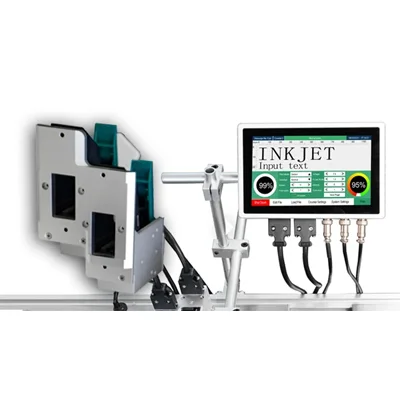
NasaJet® NJ-5000
Large Font Printer
The professional marking system for all requirements. Multiple print heads, parallel printing, and more.
www.nasajet.com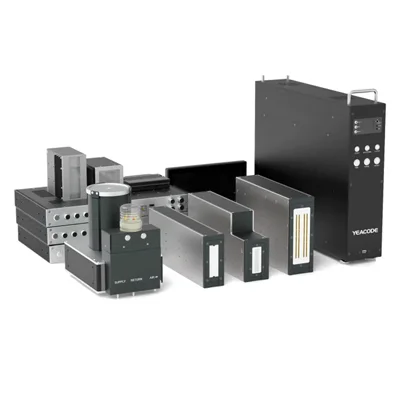
Yeacode Series 7
Marking System
Discover the Yeacode 7 Series, the marking system for the highest demands.
www.yeacode.de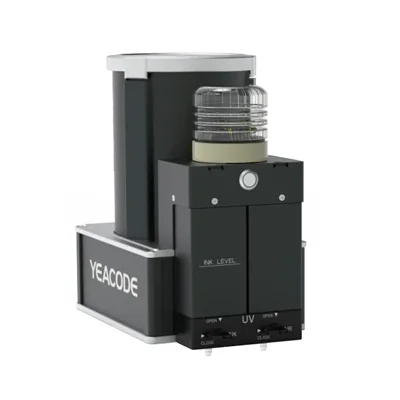
Yeacode CISS
Continuous Ink Supply System
Ensures consistent and uninterrupted ink supply for high-volume printing.
www.yeacode.de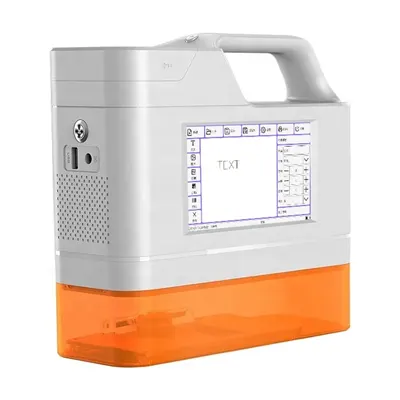
Laser Marking TL3pro
Laser Marking
Compact and portable laser marking device
Plant cultivation labeling: traceability from the start
In plant cultivation, seamless labeling is essential. Even in early production stages, plants, batches and cultures must be clearly identifiable.
TIJ marking systems and handheld printers support this process through:
- batch labeling in propagation
- variety identification in young plant production
- traceability in the breeding process
- marking of cultivation trays and containers
- documentation of production data
Precise labeling not only ensures clarity, but also forms the basis for quality assurance and traceable production processes.
Plant distribution marking: efficiency in trade and shipping
Professional labeling is also essential in plant distribution. In trade, plants must be clearly identifiable, correctly declared and efficiently processed in logistics.
Key application areas include:
- labeling of sales units
- marking of shipping cartons
- barcode printing for logistics processes
- batch labeling for traceability
- variety and origin labeling
- QR codes for product information
With TIJ marking systems, this information can be applied directly and efficiently – fast, clean and cost-effective.
Plant passport: mandatory information with high relevance in horticulture
A particularly important topic in modern horticulture is the plant passport. The plant passport is mandatory within the EU for many plants and plant products. It serves traceability and protection against the spread of plant pests.
For nurseries, this means: the plant passport must be applied correctly, clearly legible and permanently.
Why the plant passport is so important
The plant passport is a key element of legal labeling in horticulture. It contains essential information for identifying and tracing plants and is mandatory for many businesses.
Typically, the plant passport includes:
- botanical name
- origin and country of origin
- traceability code
- registration number of the business
This is where TIJ marking systems fully demonstrate their strengths: they enable high-resolution, clean and standard-compliant printing of all relevant plant passport data – directly onto labels, packaging or marking carriers.
TIJ and handheld printers for the plant passport
Mobile handheld printers are also ideal for applying plant passport information flexibly and on demand directly on site.
With TIJ marking systems and handheld printers, plant passports can be implemented efficiently:
- precise printing even of small font sizes
- clear representation of codes and mandatory data
- flexible adaptation of changing data
- ideal for labels, cartons and trays
- fast integration into existing processes
For nurseries, this is a decisive advantage to meet legal requirements efficiently and safely.