
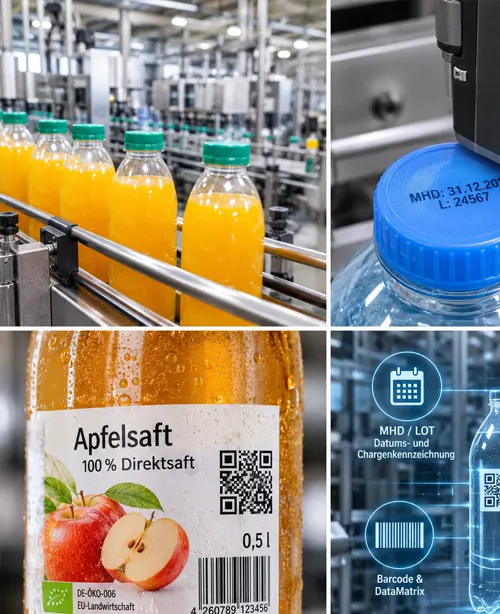
Water, Juice, Milk, Beer – Beverage Product Identification
Reliable product identification is an essential part of efficient production processes.
Traceability, Safety and Efficiency • Modern Coding Systems for Beverages
Product identification plays a central role in the beverage industry. Whether mineral water, soft drinks, juices, beer, wine or spirits, every product must be reliably identifiable and carry the information required by retailers, logistics providers and consumers. At the same time, high production speeds, different packaging materials and demanding production environments place specific requirements on the coding systems used.
Modern industrial coding technologies enable products to be marked directly during the manufacturing and filling process. This includes best-before dates, batch numbers, production codes, lot identification and other variable product information. The systems must not only operate quickly and precisely but also deliver consistently reliable print results and integrate seamlessly into existing filling and packaging lines.
For beverage manufacturers, selecting the right coding technology is therefore an important part of efficient and cost-effective production. Thermal Inkjet (TIJ) printing systems, in particular, offer interesting possibilities when flexible, high-resolution and low-maintenance coding solutions are required.
Requirements for Product Identification in the Beverage Industry
Beverage production is one of the most demanding applications for industrial product identification. Filling lines in modern facilities operate at high speeds, while products are transported, filled, sealed and labelled in various types of packaging. Coding systems must integrate reliably into these processes without disrupting production.
Requirements vary depending on the beverage, packaging format and production environment.
High Production Speeds
Modern filling lines sometimes process several thousand bottles, cans or beverage cartons per hour. Coding systems must keep pace with these speeds while ensuring consistent print quality during continuous operation. Delayed or faulty coding can result in rejected products, production downtime and additional costs.
Different Packaging Materials
Beverages are sold in glass bottles, PET bottles, HDPE containers, beverage cans, carton packaging and flexible packaging. These materials differ in terms of surface characteristics, absorbency and adhesion properties. The printing system and ink used must therefore be suitable for the respective substrate.
Long-Lasting Legibility
Best-before dates, batch numbers and production codes must remain legible throughout the entire supply and storage chain. Coding must withstand transport, storage, moisture and mechanical stress without becoming illegible.
Moisture and Demanding Environmental Conditions
Moisture, condensation and regular cleaning processes are everyday occurrences in beverage production facilities. Particularly in areas where bottles are cooled or processed immediately after filling, wet surfaces can affect ink adhesion. The coding technology used must therefore be suitable for the specific production conditions.
Flexible Product Changeovers
Beverage manufacturers frequently produce different varieties, container sizes and packaging formats on the same production line. Production data and coding content must therefore be adaptable quickly and, wherever possible, automatically. Easy operation and integration into existing control systems are important prerequisites.
What Information Must Be Printed on Beverages?
The specific coding requirements depend on the product type, legal requirements and internal traceability processes. In the beverage industry, the following information is particularly relevant:
- Best-before date: Indicates the date until which the product retains its specific characteristics when stored correctly.
- Batch number and lot identification: Enable a product to be clearly assigned to a specific production batch.
- Manufacturing date: Documents the date on which the product was manufactured or filled.
- Production time and line number: Can be used for internal process control and traceability.
- Production codes: Contain variable information for identifying and tracking individual products or production runs.
Additional variable data: Depending on the application, shift information, additional codes or customer-specific markings may also be applied.
Coding can be applied directly to the product, the closure, the label or the outer packaging. What matters is that the information is printed in the correct location and remains permanently legible under the respective operating conditions.
Coding Technologies for Beverages and Beverage Packaging
Various technologies are available for industrial beverage production. The most suitable technology depends on the type of packaging, production speed, required print quality and environmental conditions.
1. Thermal Inkjet (TIJ) – High-Resolution Inkjet Coding
Thermal Inkjet (TIJ) technology is a digital inkjet printing process in which tiny ink droplets are ejected from the nozzles of a print cartridge using thermal pulses. The ink is precisely applied to the surface of the product to be marked.
TIJ coding systems are particularly suitable for applications requiring high print resolution, flexible print content and low maintenance requirements.
Typical applications in the beverage industry include:
- Printing best-before dates on bottles and packaging
- Printing batch and lot numbers
- Coding beverage cartons and outer packaging
- Printing barcodes, QR codes and Data Matrix codes
- Coding closures, labels and cardboard packaging
- Applying variable production information
One major advantage of TIJ technology is its compact design. The printing systems can be integrated relatively easily into existing production facilities. Many systems use ink cartridges that combine the printhead and ink in a single unit. Replacing the cartridge also replaces the printhead, reducing maintenance requirements and simplifying operation.
Another advantage is the high print resolution. Even small text and complex codes can be printed with clearly defined contours. This is particularly useful when machine-readable codes are required in addition to conventional date and batch information.
2. Continuous Inkjet (CIJ) – For Very High Production Speeds
Continuous Inkjet (CIJ) is one of the established technologies in industrial product coding. This process generates a continuous stream of ink that is divided into tiny droplets and controlled by electrical fields. This produces letters and numbers directly on the product surface.
CIJ systems are frequently used in high-speed beverage filling lines. They can be used to mark glass bottles, PET bottles, beverage cans and other types of packaging.
Typical applications include:
- Best-before dates on bottle bases or necks
- Batch numbers on beverage cans
- Production codes on plastic packaging
- Coding glass bottles in beer and mineral water production
A particular strength of CIJ technology is its ability to print at very high production speeds. It can also handle different surface types and shapes.
However, this technology involves higher maintenance and operating requirements, as well as the need for suitable consumables and solvents. Companies looking to optimise their coding costs over the long term should therefore compare CIJ with alternative inkjet technologies.
3. Laser Coding – Permanent Marking Without Ink
Laser coding uses a focused laser beam to apply information directly to the surface of a product or package. Depending on the material and laser type, markings are created through material removal, colour changes or other controlled surface reactions.
Laser systems are suitable for applications such as:
- Permanent markings on glass bottles
- Markings on aluminium beverage cans
- Coding closures
- Serial numbers and traceability codes
- Logos and product-specific markings
Since no ink or cartridges are required, the corresponding consumables are eliminated. With the appropriate material and process selection, markings are permanent and largely resistant to abrasion.
However, investment costs and integration requirements must be taken into account. Depending on the material, a specific laser source may also be necessary. Safety measures, such as protection against laser radiation, are also required. Any potential changes to the packaging surface must likewise be considered when designing the process.
4. Label Printing and Labelling
In addition to direct product coding, labelling plays an important role in the beverage industry. Labels carry extensive information such as product names, ingredients, nutritional values, manufacturer details, deposit information and brand design.
Labels are either pre-printed and applied automatically or printed during the production process and subsequently applied.
The advantage is that labels offer space for extensive information and a wide range of graphic design options. Depending on the production line configuration, variable data such as batch numbers or best-before dates can also be printed directly onto the label or packaging.
However, for applying production and batch information alone, a direct coding system is often the simpler solution, as no additional label is required.
5. Thermal Transfer Overprinting (TTO)
Thermal Transfer Overprinting is primarily used for coding flexible packaging materials. A heated printhead transfers ink from a special ribbon onto the packaging material.
Typical applications include:
- Coding beverage pouches
- Printing on film packaging
- Best-before dates on composite materials
- Batch numbers and variable text on packaging films
TTO systems provide good print quality and are particularly suitable for packaging machines that process films continuously or intermittently.
One disadvantage is the additional consumption of thermal transfer ribbons. These must be replaced regularly, resulting in corresponding operating costs.
Which Coding Technology Is Suitable for Which Beverage?
| Application | Suitable Coding Technologies |
|---|---|
| Mineral water in PET bottles | Thermal Inkjet (TIJ), Continuous Inkjet (CIJ), Laser |
| Beer in glass bottles | Continuous Inkjet (CIJ), Thermal Inkjet (TIJ, depending on material and ink), Laser |
| Aluminium beverage cans | Continuous Inkjet (CIJ), Thermal Inkjet (TIJ), Laser |
| Beverage cartons | Thermal Inkjet (TIJ), Continuous Inkjet (CIJ) |
| Cardboard outer packaging | Thermal Inkjet (TIJ), Large Character Inkjet |
| Flexible beverage pouches | Thermal Transfer Overprinting (TTO), Thermal Inkjet (TIJ) |
| Bottle closures | Thermal Inkjet (TIJ), Continuous Inkjet (CIJ), Laser |
NasaJet® NJ-100
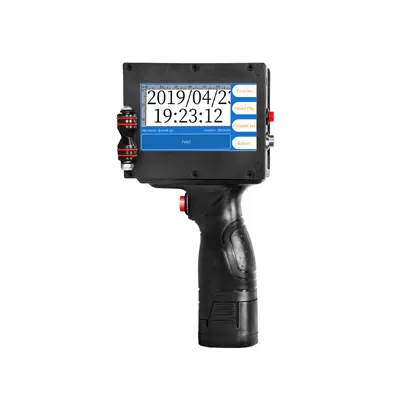
Handheld Printer
The affordable entry into the world of portable TIJ printing. Mark and label quickly and economically anywhere.
www.nasajet.com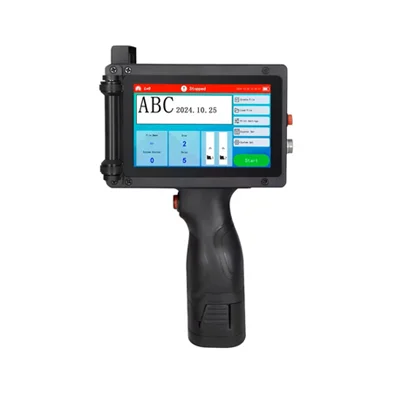
NasaJet® NJ-500
Handheld Printer
With two 1-inch TIJ cartridges, the NasaJet® NJ-500 achieves print heights over 50 mm. Large font printing in a portable format.
www.nasajet.com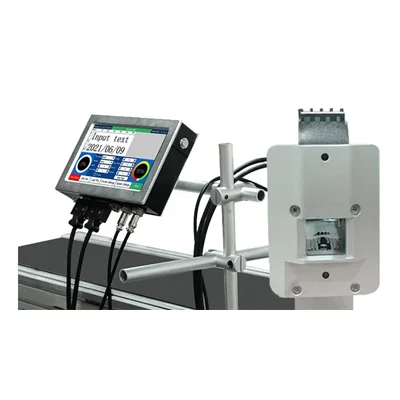
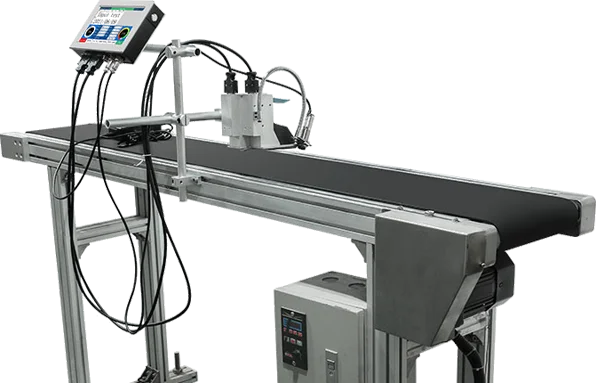
NasaJet® NJ-1000
Marking System
The NJ-1000 marking system is suitable for quickly upgrading existing production lines for simple labeling tasks.
www.nasajet.com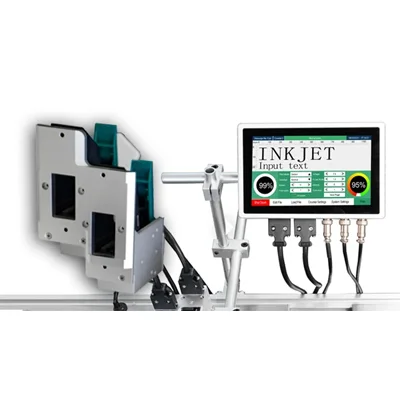
NasaJet® NJ-5000
Large Font Printer
The professional marking system for all requirements. Multiple print heads, parallel printing, and more.
www.nasajet.com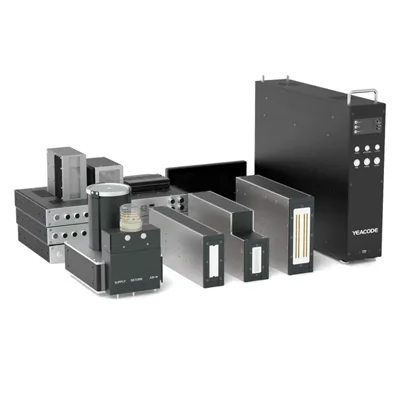
Yeacode Series 7
Marking System
Discover the Yeacode 7 Series, the marking system for the highest demands.
www.yeacode.de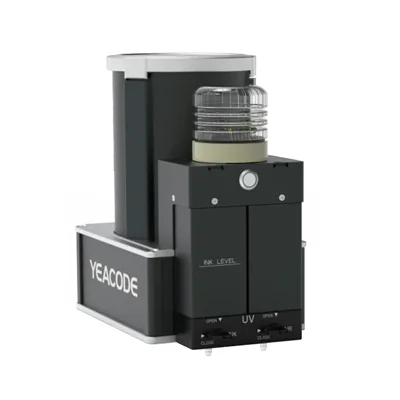
Yeacode CISS
Continuous Ink Supply System
Ensures consistent and uninterrupted ink supply for high-volume printing.
www.yeacode.de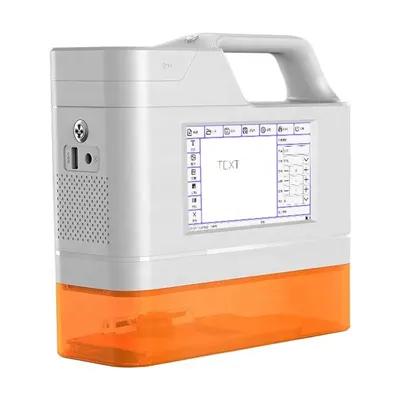
Laser Marking TL3pro
Laser Marking
Compact and portable laser marking device
TIJ Coding Systems in the Beverage Industry: Flexible, Precise and Cost-Effective
While CIJ systems have traditionally been used for particularly high production line speeds, Thermal Inkjet systems offer interesting advantages for many other coding applications in beverage production, particularly where mass production is not the primary focus, such as in small breweries or organic and BIO-certified businesses.
For carton packaging, outer packaging, labels and suitable plastic surfaces, TIJ printers can provide a cost-effective alternative or complementary solution.
High Print Quality for Text and Codes
TIJ systems can print more than just numbers and simple text. Barcodes, QR codes and Data Matrix codes can also be applied in high resolution.
This is particularly useful when coding requirements go beyond conventional best-before dates. For example, beverage manufacturers can integrate additional batch traceability information or internal identification codes.
Quick Adaptation to Changing Production Batches
Beverage manufacturers regularly switch between different products, flavours and packaging sizes. Coding content must be adjusted accordingly.
With digital TIJ systems, print layouts and variable information can be modified using software. This allows different batches and production orders to be processed flexibly without requiring mechanical adjustments to the printing system for every product changeover.
Low Maintenance Requirements
Maintenance requirements are an important economic factor. Conventional industrial inkjet systems may require regular cleaning and maintenance.
In many TIJ systems, the ink supply and printhead are combined in a replaceable cartridge. This eliminates many of the typical printhead cleaning procedures. Consumables can also be replaced relatively easily.
Easy Integration into Existing Filling Lines
TIJ printing systems can be installed at fixed positions along conveyor belts, packaging machines or other points within the production line.
Sensors and trigger signals initiate the printing process in accordance with product movement. An encoder can synchronise the printing speed with the conveyor speed. Suitable interfaces also allow the systems to be connected to higher-level control systems.
For example, best-before dates and batch numbers can be transferred automatically from a production system to the printer.
Automation and Traceability: The Future of Beverage Coding
Industrial product coding is increasingly evolving from an isolated printing operation into an integral part of interconnected production and logistics processes.
Modern beverage manufacturers need more than just a printing system that reliably applies data to packaging. Equally important is the reliable transmission of the correct information to the right printer and subsequent verification of the printed results.
Various automation and inspection technologies are used to achieve this.
PLC Integration and Automatic Data Transfer
By connecting coding systems to a programmable logic controller (PLC), they can be integrated directly into the production process. Production orders, batch numbers and other variable data can be transferred automatically.
This reduces manual input and minimises the risk of operating errors.
Sensors and Encoders
Sensors detect products moving along the production line and trigger the printing process at the correct moment. Encoders measure conveyor belt speed and help ensure precise positioning of the marking, even when speeds vary.
Consulting and Implementation of Coding Solutions by Geotechtronics GmbH
Selecting a suitable coding system should always be based on a thorough analysis of the production conditions. Not every printing technology is equally suitable for every type of packaging, production speed or industrial environment.
Geotechtronics GmbH supports companies in selecting, planning and implementing customised coding solutions. Based in Weilheim in Upper Bavaria, Germany, the company offers a broad portfolio of industrial printing and marking systems and supports customers from the initial requirements analysis through to integration into existing production processes.
For the beverage industry, the product portfolio includes modern Thermal Inkjet coding systems (TIJ), industrial inkjet printers and complementary automation and inspection technologies.
The Right Coding Solution for Your Beverage Production
Are you looking for a reliable solution for coding your beverages and packaging? Contact Geotechtronics GmbH to discuss your requirements. Together, we can develop a coding concept tailored to your products, production speeds and technical requirements.
Whether mineral water, soft drinks, juices, beer or other beverages, reliable product coding is an essential part of efficient production processes. Modern TIJ coding systems offer particularly interesting possibilities for high-resolution marking and variable production data.
Geotechtronics GmbH supports you in finding the right technology for your application and integrating it cost-effectively into your production environment.