Consulting and Products
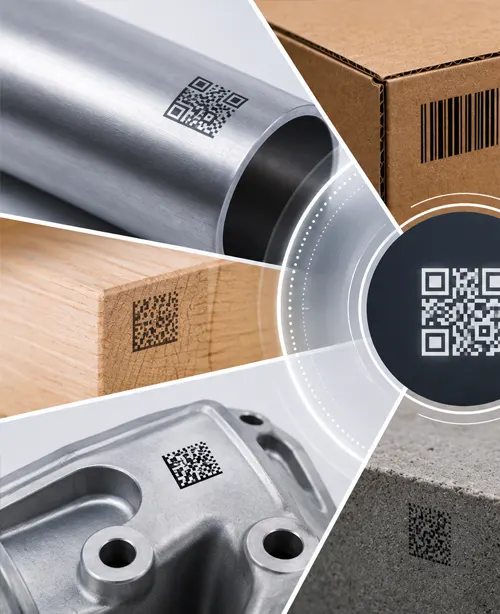
Industrial inkjet printers have become an essential part of modern manufacturing processes. Whether printing on cartons, plastic packaging, metal components, or shipping boxes, almost every industry benefits from the capabilities of modern inkjet technologies.
Industrial Inkjet Printers Offer Numerous Advantages
Industrial product coding and marking have become critical elements of modern production environments. Nearly every product requires a unique identifier, whether for traceability, regulatory compliance, quality assurance, or logistics. Best-before dates, batch numbers, serial numbers, barcodes, and QR codes must be applied reliably, remain clearly legible, and often be printed at high production speeds. Industrial inkjet printers have established themselves as one of the most flexible and cost-effective solutions available. However, selecting the right system is far more complex than it may initially appear.
Many companies begin their search for a coding and marking solution by focusing on the printer itself. In practice, however, the planning of the entire marking system should come first. Even the most advanced inkjet printer cannot achieve its full potential if it is not properly integrated into the production environment. Professional consulting therefore goes far beyond selecting a printing technology. It includes a detailed analysis of the complete marking process—from the substrates to be printed and production speeds involved to the integration of existing IT, ERP, and automation systems.
Requirements for Modern Marking Systems Continue to Increase
Manufacturing companies today face the challenge of printing ever-increasing amounts of data directly onto products and packaging. While a simple production date was often sufficient in the past, modern supply chains now require far more sophisticated coding and marking solutions. QR codes, Data Matrix codes, and GS1-compliant barcodes play a critical role in logistics, food production, pharmaceuticals, and many other industries. At the same time, expectations regarding print quality, readability, and process reliability continue to rise.
In addition, many production lines now operate at extremely high speeds. Conveyor systems can transport products through manufacturing environments at several hundred meters per minute. Coding and marking must be applied with precise positioning and timing without disrupting production flow. Even minor printing errors can lead to product waste, customer complaints, or problems within automated downstream processes.
For this reason, the selection of an industrial inkjet printer should always be based on a comprehensive analysis of production requirements. Factors such as substrate characteristics, environmental conditions, conveyor speeds, available installation space, and data management requirements all influence which technology will deliver the most reliable long-term results.
Different Requirements Demand Different Technologies
Many companies initially search for a printer capable of applying specific information to their products. In practice, however, the challenge is much broader. A coding and marking system must fit the production line, substrate, production speed, operational processes, and future growth plans of the business.
Several key questions should be addressed during the planning stage: What information needs to be printed? Which materials require coding or marking? What production speeds must be supported? Are variable data and serialization required? Should the system be integrated with ERP, MES, or warehouse management software?
The more precisely these requirements are defined, the more efficient, reliable, and cost-effective the final marking solution will be.
A professional consulting process therefore focuses not only on the printing technology itself but on the entire production environment. This approach helps prevent future operational issues while ensuring that investments are targeted toward the most suitable solution.
Not every industrial inkjet printer is suitable for every application. Selecting the right technology depends largely on the products being marked, the required print quality, environmental conditions, and the production speeds involved.
Continuous Inkjet (CIJ) for High-Speed Production Lines
Continuous Inkjet (CIJ) systems have been among the most widely used industrial coding and marking technologies for decades. They are particularly valued for their ability to operate at extremely high production speeds while delivering reliable results on a wide range of substrates. Plastic packaging, metal surfaces, glass containers, films, and many other materials can be marked efficiently, even when products move rapidly through production lines. Typical applications include:
- Food manufacturing
- Beverage production
- Pharmaceutical packaging
- Cable and pipe marking
Where durable codes must be applied to diverse materials under demanding production conditions, CIJ technology continues to offer significant advantages.
Thermal Inkjet (TIJ) for High-Resolution Printing
Thermal Inkjet (TIJ) technology is becoming increasingly important in modern packaging environments. TIJ printers are known for their excellent print quality and can produce sharp text, barcodes, Data Matrix codes, and QR codes with exceptional clarity.
These systems are particularly effective when printing on corrugated boxes, folding cartons, paper packaging, and coated substrates. Many manufacturers also benefit from lower maintenance requirements, as numerous TIJ systems utilize easily replaceable ink cartridges.
For companies that require premium product coding, high-resolution graphics, or GS1-compliant barcodes, TIJ technology is often the most cost-effective and efficient solution available today.
Piezo Inkjet for Large Characters and Packaging Marking
When larger print heights or extensive coding areas are required, Piezo Inkjet technology is often the preferred choice. These systems are commonly used for outer packaging, shipping cartons, pallet labeling, and applications within construction material industries.
The primary advantages of Piezo Inkjet systems include:
- Large print heights
- Flexible ink options
- Low operating costs
- Excellent print quality for large-format applications
This makes Piezo technology particularly attractive for manufacturers seeking cost-efficient case coding and secondary packaging identification.
The Production Line Determines the Marking System
A coding and marking system can only achieve maximum efficiency when it is properly integrated into the existing production environment. Every successful project therefore begins with a detailed assessment of the production line and its operational requirements.
Challenging industrial environments often expose equipment to dust, moisture, vibration, temperature fluctuations, and other factors that can affect long-term reliability. Careful planning and system selection help prevent downtime, reduce maintenance requirements, and maximize operational performance.
The most effective marking solutions are those that align technology, production processes, and future business requirements into a single integrated system.
Digitalization Is Transforming Industrial Coding and Marking
As Industry 4.0 continues to reshape manufacturing, product coding and marking technologies are evolving as well. Modern inkjet printers increasingly operate as part of fully connected production environments. Print data can be imported automatically from ERP systems, production orders can be processed digitally, and coding information can be adapted dynamically to changing products and packaging formats.
This creates numerous operational benefits:
- Reduced manual data entry
- Lower error rates
- Improved process reliability
- Faster product changeovers
- Enhanced traceability
Particularly in industries with frequent product changes, customization requirements, or small batch production, automated coding and marking workflows can generate substantial efficiency gains.
Consulting and Planning Are the Keys to Success
Industrial inkjet printers have become indispensable components of modern manufacturing operations. Whether printing on corrugated packaging, plastic containers, metal parts, labels, or shipping cartons, virtually every industry benefits from the capabilities of today's advanced inkjet technologies.
However, the most important success factor is not the printer itself. Long-term success depends on comprehensive consulting, careful planning, and the correct integration of the entire marking system. Only by considering production processes, substrate requirements, regulatory obligations, and automation opportunities from the very beginning can manufacturers ensure reliable, cost-effective, and future-proof coding and marking solutions.
Organizations that invest in proper system design establish the foundation for efficient production, consistent product traceability, and sustainable operational performance for years to come.
Industry Examples
High-quality and cost-effective industrial printing is required in almost every sector today. Whether for legal requirements, traceability, or consumer information – dynamic printing processes for text, dates, barcodes, or logos are needed wherever profit-oriented operations are in place.
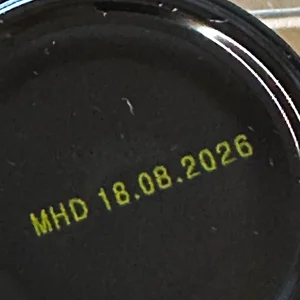
Automatic best-before date and batch coding on cartons, films, and labels – safe, clean, and compliant with standards.
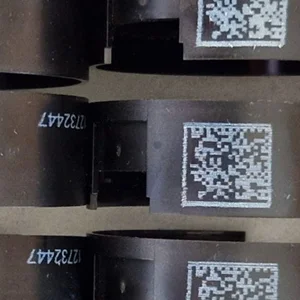
Precise marking of components, profiles, and technical parts – sensor-controlled or robot-assisted.
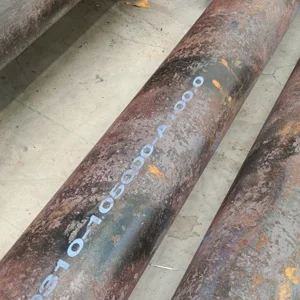
Robust TIJ marking with encoder compensation for variable formats and speeds, including large-character printing.

Serial numbers, LOT codes, and 2D codes with validation and data import from higher-level systems.
Geotechtronics GmbH – Your Partner for Future-Proof Industrial Inkjet Printing Solutions
Efficient coding and marking processes do not happen by accident. They are the result of professional consulting, careful planning, and technically sound implementation. This is exactly where we deliver value.
As an experienced provider of industrial inkjet printing solutions, we support our customers throughout the entire project lifecycle—from requirements analysis and technology selection to complete integration within existing production environments. Our goal is not simply to supply equipment but to develop sustainable solutions that fit seamlessly into your manufacturing processes.
Whether you require TIJ printing systems, large-character inkjet printers, laser marking technologies, or complex system integration projects, we develop customized concepts tailored to your industry, substrates, production speeds, and operational requirements. Cost efficiency, process reliability, and long-term scalability remain at the center of every project.
In addition to supplying high-performance coding and marking systems, we provide comprehensive technical support, service programs, training, and long-term assistance. This ensures that your investment delivers reliable performance not only today but also as your production requirements evolve in the future.
Benefit from our expertise, industry experience, and commitment to innovation—and transform your product identification process into a genuine competitive advantage. Our specialists will be pleased to discuss your requirements and recommend the most suitable solution.
Professional Consulting for Industrial Coding and Marking Systems
Selecting a coding and marking solution involves far more than choosing a printer. Long-term success depends on understanding production processes, substrates, regulatory requirements, integration needs, and future scalability. Professional consulting helps ensure that the chosen solution delivers reliable results and maximum return on investment.
At Geotechtronics, we combine extensive industry experience with a broad portfolio of industrial printing and marking technologies to develop practical and cost-effective solutions tailored to your specific requirements.
- Selection of suitable print controllers and printheads
- Integration into conveyor and automation systems
- Operator and maintenance training
- Service and support concepts
- Custom project planning and implementation
Seamless Integration into Existing Production Systems
Modern coding and marking solutions must support the requirements of Industry 4.0 and digitally connected manufacturing environments.
Our systems can be integrated flexibly into virtually any production environment:
- Stand-alone or fully line-integrated operation
- PLC and industrial control system connectivity
- Automated data transfer from ERP and MES platforms
- Sensor, encoder, and vision system integration
- Centralized print management and production control
By connecting coding and marking equipment directly to production data flows, manufacturers can improve traceability, reduce manual intervention, and increase overall process reliability.

Contact
The quickest way to reach us (Mo-Fr, 10 a.m. to 5 p.m.) is by telephone or email.
If you wish to visit our office, please make an appointment in advance.