

Cosmetic labelling - consulting, solutions, products
The labelling of cosmetic products is a central component of the cosmetics industry.
Importance and legal basis of cosmetic labelling
The labelling of cosmetic products not only fulfills legal requirements, but also plays an important role in consumer protection, traceability, and brand communication.
Companies that manufacture or distribute cosmetic products must ensure that their products are correctly labelled – otherwise they may face warnings, sales bans, or legal consequences.
Cosmetic labelling is clearly regulated in the EU, in particular by the EU Cosmetics Regulation (EC) No. 1223/2009.
👉 Important:
- Labelling must be clearly visible, easy to read, and permanently applied
- It must be present on both packaging and container
Mandatory information on cosmetic products
The following information is mandatory:
1. Ingredients (inci list)
- All ingredients must be listed under “ingredients”
- Order by concentration (descending)
👉 Example: ingredients: aqua, glycerin, parfum
2. Name and address of the responsible person
- manufacturer or importer
- full address required
👉 Example: XYZ cosmetics ltd., main street 1, 12345 berlin
3. Minimum durability or pao (period after opening)
- mhd for shelf life under 30 months
- pao symbol for longer shelf life
👉 Example: 12m (usable for 12 months after opening)
4. Batch number (batch code)
- for traceability in case of issues
👉 Example: batch: l2026-03-15
5. Intended use
- if not clearly identifiable
👉 Example: moisturizing face cream
6. Precautions / warnings
- protection against improper use
👉 Example: do not get into eyes. keep out of reach of children.
7. Nominal content
- indicated in ml or g
👉 Example: 50 ml
8. Country of origin (for imports)
- mandatory for products outside the eu
Practical examples from the cosmetics industry
These examples show that labeling in the cosmetics industry must be adapted individually depending on the product type and packaging. Companies must comply with legal requirements while also considering practical and design aspects.
Example 1: Shampoo
For a classic shampoo, labeling is usually applied directly to the packaging. The batch number is often printed using inkjet systems, as it must be generated flexibly and in real time. The expiration date is clearly placed on the label, while the full inci list is printed on the back.
Example 2: Lipstick (small packaging)
For products such as lipsticks or mascara, available space is very limited. Manufacturers therefore face the challenge of fitting all mandatory information without affecting design. In practice, fold-out labels or additional leaflets are often used.
Example 3: Perfume
In the premium segment, such as perfumes, appearance plays a key role. Glass bottles are often marked using laser engraving, creating a durable and high-quality marking. Detailed product information is placed on the outer packaging.
Example 4: Natural cosmetics
Natural cosmetic products often include additional voluntary labels such as “vegan”, “cruelty-free”, or “paraben-free”. These must be verifiable and comply with legal requirements.
Challenges in cosmetic labelling
Cosmetic labelling involves several challenges in practice that manufacturers must address strategically. A key issue is limited packaging space, especially for small products such as lipsticks or cream jars.
Another challenge is material diversity. Glass, plastic, metal, and paper require different marking technologies such as inkjet, laser, or thermal transfer printing.
In addition, legal requirements change frequently, requiring continuous monitoring and flexible systems.
Finally, international markets often require multilingual labelling, which increases complexity and space requirements.
Labelling methods for cosmetic products
There are various technologies for labelling, including:
- adhesive labels
- continuous inkjet (cij)
- thermal inkjet (tij)
- laser marking for glass and metal surfaces
Each method has its specific use cases. However, tij technology is particularly flexible and cost-efficient.
Direct marking with tij systems
what is tij (thermal inkjet)?
Thermal inkjet technology is based on precise ink ejection using thermal pulses. It enables high-resolution printing on various materials.
Compared to other technologies, tij offers:
- high print quality (up to 600 dpi)
- low maintenance systems
- compact design
- easy integration into production lines
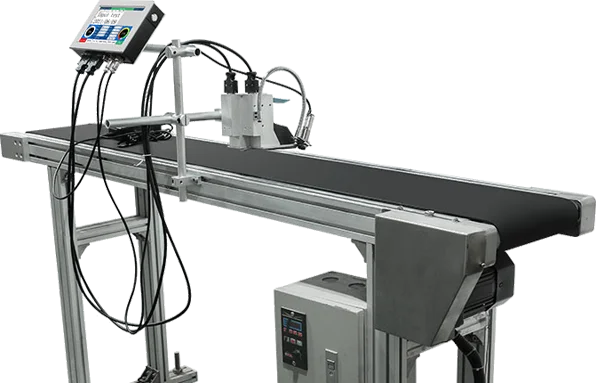
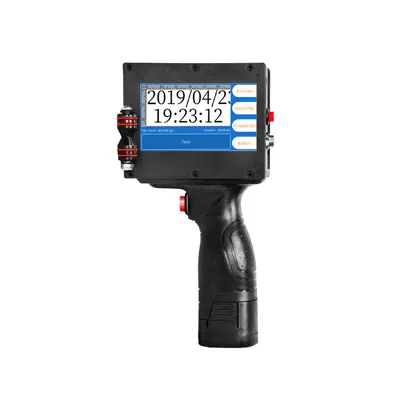
NasaJet® NJ-100
Handheld Printer
The affordable entry into the world of portable TIJ printing. Mark and label quickly and economically anywhere.
www.nasajet.com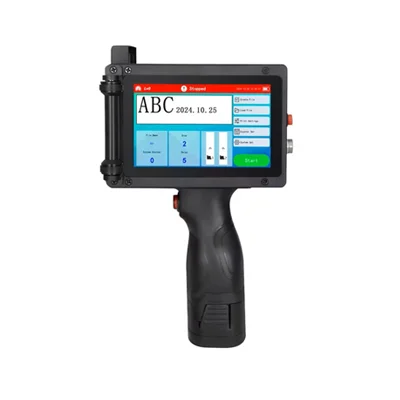
NasaJet® NJ-500
Handheld Printer
With two 1-inch TIJ cartridges, the NasaJet® NJ-500 achieves print heights over 50 mm. Large font printing in a portable format.
www.nasajet.com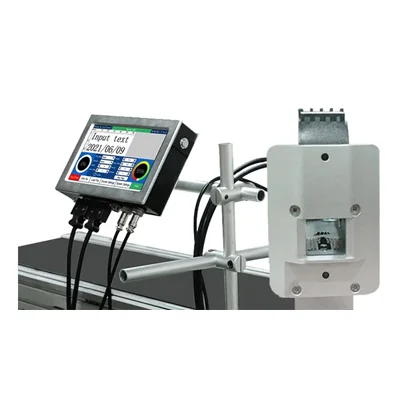
NasaJet® NJ-1000
Marking System
The NJ-1000 marking system is suitable for quickly upgrading existing production lines for simple labeling tasks.
www.nasajet.com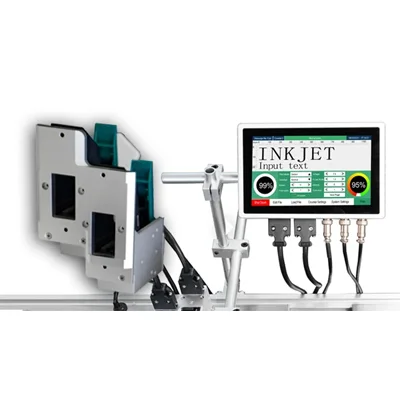
NasaJet® NJ-5000
Large Font Printer
The professional marking system for all requirements. Multiple print heads, parallel printing, and more.
www.nasajet.com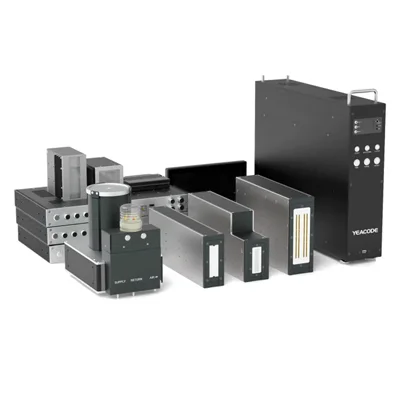
Yeacode Series 7
Marking System
Discover the Yeacode 7 Series, the marking system for the highest demands.
www.yeacode.de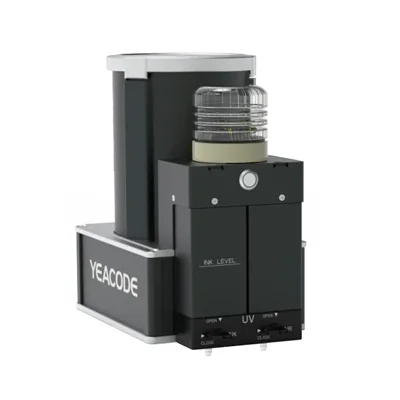
Yeacode CISS
Continuous Ink Supply System
Ensures consistent and uninterrupted ink supply for high-volume printing.
www.yeacode.de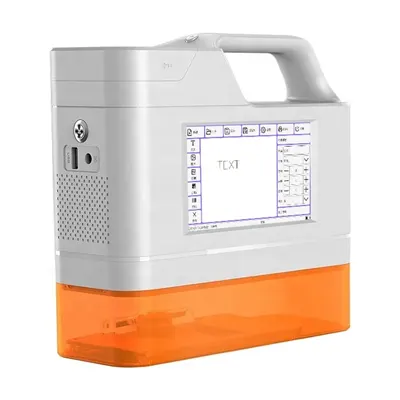
Laser Marking TL3pro
Laser Marking
Compact and portable laser marking device
Consulting as a success factor: labeling in the cosmetics industry
With increasing digitalization and automation, direct marking will continue to gain importance in the cosmetics industry.
Smart factory concepts, IoT integration, and automated quality control make high-resolution, flexible marking systems indispensable.
At Geotechtronics, we offer many years of experience and a broad product portfolio for demand-oriented and cost-efficient solutions to your individual labeling challenges.
- Selection of suitable control electronics and print heads
- Recommendation of suitable inks
- Integration into conveyor technology and control systems
- Training of employees
- Service and support concepts
- ...
Integration into existing systems
Especially TIJ marking systems and handheld printers offer companies the necessary flexibility to react quickly to changing requirements.
TIJ marking systems can be integrated flexibly:
- Stand-alone or line-integrated
- PLC connection
- Automatic data input
- Sensor and encoder integration
- ...