
Labeling of pharmaceutical products – consulting, solutions, products
What requirements does the pharmaceutical industry place on labeling systems, which technologies have become established, and why TIJ systems in particular are increasingly preferred in many applications.
Importance and regulatory foundations of pharmaceutical labeling
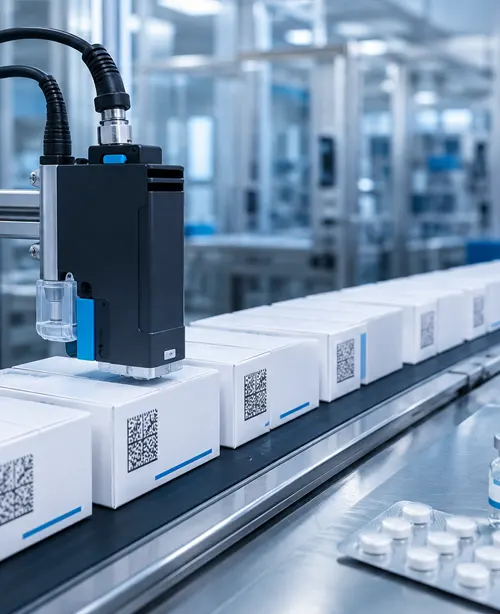
The labeling of pharmaceutical products is one of the most sensitive areas of industrial production. Hardly any other industry is subject to such strict regulatory requirements regarding traceability, product safety, and readability of markings. Batch numbers, expiration dates, serial numbers, or DataMatrix codes must be applied permanently, precisely, and machine-readably to packaging and products – often at high production speeds and under demanding environmental conditions.
At the same time, manufacturers are under increasing pressure to make their production lines more efficient, flexible, and digital. Modern industrial marking systems such as TIJ printers (thermal inkjet) or mobile handheld printers are playing an increasingly important role. They enable reliable marking while maintaining low maintenance costs and high print quality.
Why labeling in the pharmaceutical industry is so important
Pharmaceutical products must be clearly identifiable worldwide. Incorrect or illegible labeling can have serious consequences – both for patients and manufacturers.
Labeling fulfills several essential functions:
- Traceability throughout the entire supply chain
- Protection against product counterfeiting
- Compliance with legal requirements
- Ensuring patient safety
- Support for automated logistics and inspection processes
Especially with the introduction of global serialization requirements, the importance of modern labeling systems has increased significantly. Packaging today often requires unique serial numbers and machine-readable codes that are stored and verifiable in databases.
Regulatory requirements in the pharmaceutical industry are among the strictest in the world. Manufacturers must ensure that all markings remain permanently legible, correctly positioned, and tamper-resistant.
The most important information on pharmaceutical packaging includes:
- Batch numbers
- Expiration dates
- Serial numbers
- DataMatrix codes
- Barcodes
- Product information
- UDI markings for medical devices
Print quality must remain consistently high. Even minor deviations can prevent codes from being reliably scanned. This can result in waste, production interruptions, or regulatory risks.
In addition, marking systems often need to operate in validated production environments. Any modification to hardware or software may require documentation and validation.
Challenges of industrial labeling in the pharmaceutical industry
The requirements for modern marking systems go far beyond simply printing text. Production lines in the pharmaceutical industry often operate at high speeds and process a wide variety of packaging materials.
Labeling systems must be able to:
- print on cardboard, foil, plastic, or labels,
- generate high-resolution codes,
- process variable data,
- integrate into existing production lines,
- operate reliably with minimal maintenance,
- support GMP-compliant operation.
In addition, the trend toward smaller batch sizes and more frequent product changes requires production lines to become increasingly flexible. This is where digital printing technologies are gaining importance.
TIJ printing systems in the pharmaceutical industry
Thermal inkjet, or TIJ, has become a particularly attractive technology for pharmaceutical labeling applications in recent years.
TIJ printers use thermal inkjet cartridges and produce high-resolution print results within a comparatively compact design. The technology originally came from the office sector but has been specifically developed further for industrial applications.
TIJ offers several advantages, especially in the pharmaceutical industry.
High print quality
DataMatrix codes and small text must be printed with absolute precision. TIJ systems achieve high print resolutions and produce extremely sharp print images. This is especially important for small packaging formats.
Low-maintenance technology
Compared to some other industrial printing technologies, TIJ systems require very little maintenance. Since the printhead and ink supply are often integrated into a single cartridge, maintenance effort is significantly reduced.
This is a major advantage in regulated production environments because downtime can be minimized.
Easy integration
TIJ printers can be integrated relatively easily into existing production lines and manufacturing systems. Their compact design also makes them suitable for confined production environments.
Flexible data processing
Modern systems can process variable data in real time. This includes:
- Serial numbers, batch numbers
- Timestamps, expiration dates
- Barcodes, QR codes, DataMatrix codes
This makes TIJ systems ideal for serialization solutions.
Differences between CIJ, laser, and TIJ
Various marking technologies are used in the pharmaceutical industry. The most suitable solution depends on the application, material, and production speed.
Continuous inkjet (CIJ) is often used for very high-speed production lines. These systems are robust and versatile, but they require regular maintenance and operate with solvents.
Laser marking provides permanent markings without consumables. However, acquisition costs are usually higher, and not every material is equally suitable for laser marking.
TIJ systems are often positioned as an especially attractive solution for high-resolution printing on packaging and cartons. They combine excellent print quality with easy operation and low maintenance requirements.
Especially for pharmaceutical secondary packaging such as folding cartons or labels, TIJ has become a preferred technology in many applications today.
Requirements for modern marking systems
The future of pharmaceutical labeling will be strongly shaped by digitalization and automation. Modern systems today must do far more than simply print a date. Important requirements include:
- Network connectivity
- Integration into MES and ERP systems
- Centralized print data management
- Real-time monitoring
- Validation capability
- High operational reliability
In addition, user-friendly interfaces and intelligent software solutions are becoming increasingly important in order to reduce operator errors.
NasaJet® NJ-100
Handheld Printer
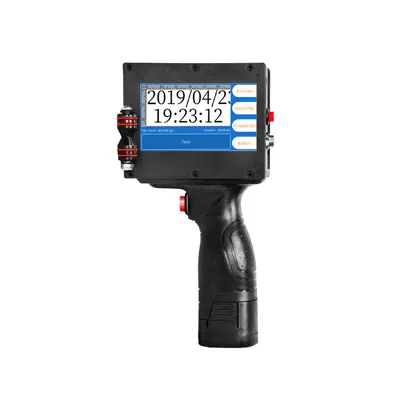
The affordable entry into the world of portable TIJ printing. Mark and label quickly and economically anywhere.
www.nasajet.com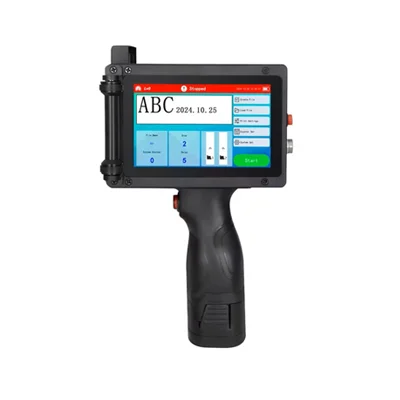
NasaJet® NJ-500
Handheld Printer
With two 1-inch TIJ cartridges, the NasaJet® NJ-500 achieves print heights over 50 mm. Large font printing in a portable format.
www.nasajet.com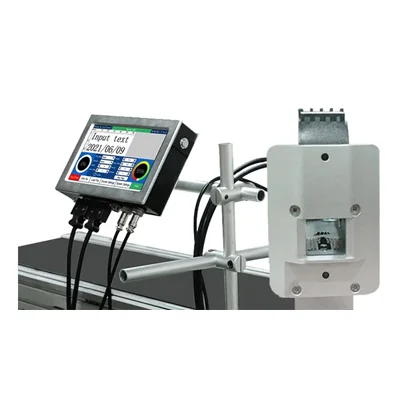
NasaJet® NJ-1000
Marking System
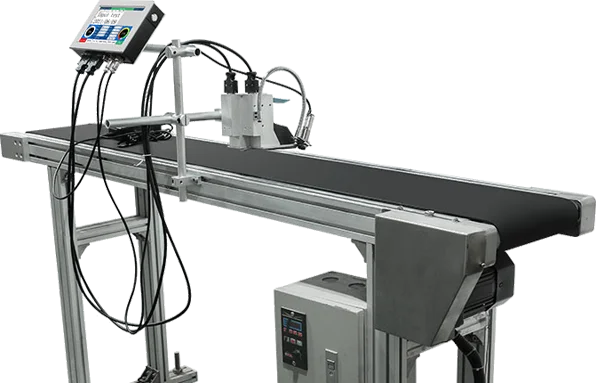
The NJ-1000 marking system is suitable for quickly upgrading existing production lines for simple labeling tasks.
www.nasajet.com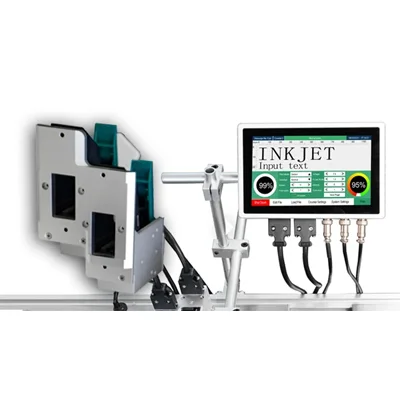
NasaJet® NJ-5000
Large Font Printer
The professional marking system for all requirements. Multiple print heads, parallel printing, and more.
www.nasajet.com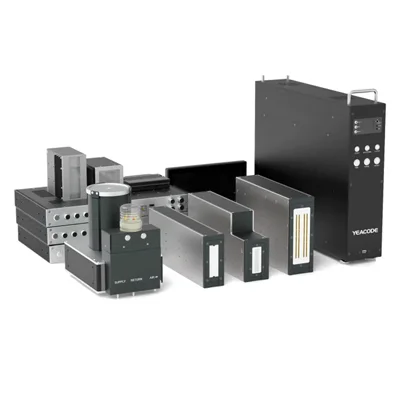
Yeacode Series 7
Marking System
Discover the Yeacode 7 Series, the marking system for the highest demands.
www.yeacode.de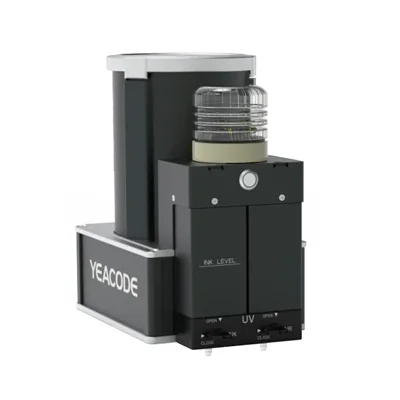
Yeacode CISS
Continuous Ink Supply System
Ensures consistent and uninterrupted ink supply for high-volume printing.
www.yeacode.de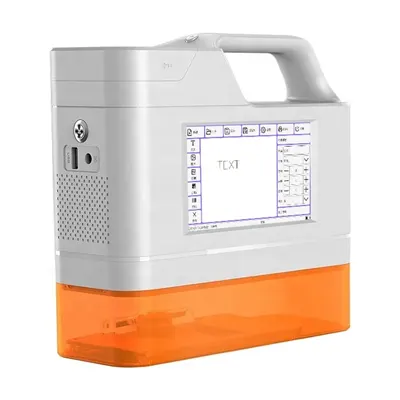
Laser Marking TL3pro
Laser Marking
Compact and portable laser marking device
Consulting as a success factor: labeling in the pharmaceutical industry
With increasing digitalization and automation, direct marking will continue to gain importance in the pharmaceutical industry. Smart factory concepts, IoT integration, and automated quality control make high-resolution and flexible marking systems indispensable. At Geotechtronics, we provide application-oriented and cost-effective solutions for your individual marking challenges based on many years of experience and a broad product portfolio.
- Selection of suitable control electronics and printheads
- Recommendation of suitable inks
- Integration into conveyor and control systems
- Employee training
- Service and support concepts
- ...
Customized solutions – integration into existing systems
The future of pharmaceutical labeling will be strongly influenced by digitalization and automation. Modern systems today must do far more than simply apply a date.
TIJ marking systems and handheld printers in particular provide companies with the flexibility required to respond quickly to changing requirements.
TIJ marking systems can be integrated flexibly:
- Stand-alone or fully integrated into production lines
- Control via PLC
- Automatic data transfer
- Sensor and encoder integration
- ...